Where the Wild and the Wise Converge: How Wildlife Conservation Tourism and Anthropological Travel Are Crafting the Soul of Regenerative Encounters
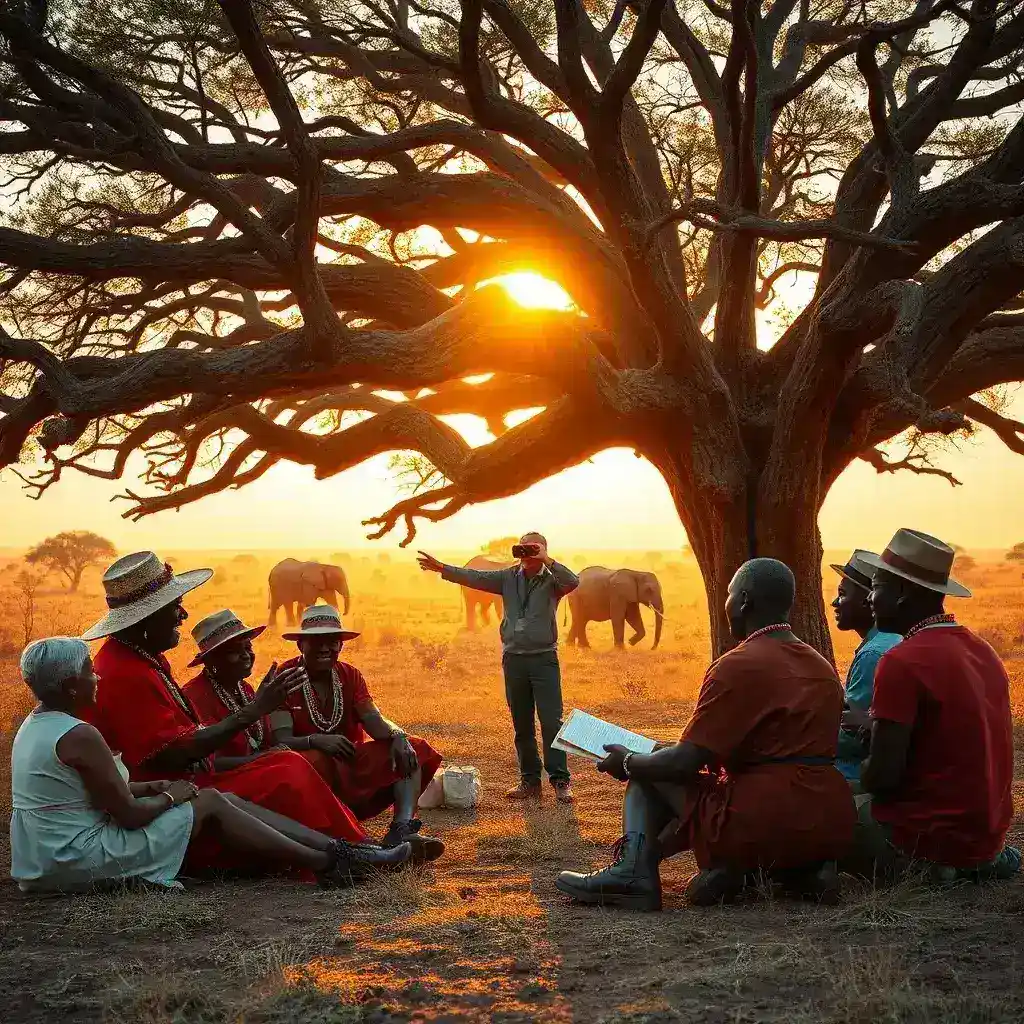
The first light of dawn spills over the savanna like liquid gold, painting the acacia trees in hues of amber and rose. You stand at the edge of the wilderness, not as a spectator, but as a participant in an ancient rhythm—one that has pulsed through the veins of this land long before human footsteps ever marked its soil. This is not just a safari. This is a pilgrimage into the heart of what it means to belong—to the earth, to its creatures, and to the stories that have shaped both. Here, where the wild and the wise converge, a new kind of travel is being born: one that does not merely observe, but regenerates.
The Call of the Untamed
Wildlife conservation tourism is no longer about the thrill of the chase or the trophy of a photograph. It is about listening—to the rustle of grass that signals a lion’s approach, to the distant trumpet of an elephant calling its herd, to the silence that follows a predator’s hunt. These moments are not fleeting; they are sacred. They demand presence, reverence, and a willingness to step beyond the role of a passive tourist into that of a steward. When you track a rhino through the bush with a guide who has spent a lifetime studying its habits, you are not just witnessing conservation in action; you are becoming part of its narrative. The mud on your boots, the sweat on your brow, the hushed awe in your voice as you spot the creature’s massive form emerging from the thicket—these are the threads that weave you into the fabric of the wild.
But the wild does not exist in isolation. It is intertwined with the people who have lived alongside it for generations, whose knowledge is as vast as the landscapes they inhabit. This is where anthropological travel steps in, not as an academic exercise, but as a bridge between worlds. Imagine sitting beneath a baobab tree with a Maasai elder, listening as they recount the oral histories of their people—stories of drought and plenty, of migrations and rituals, of a deep, unshakable connection to the land. These are not just tales; they are lessons in resilience, in harmony, in the kind of wisdom that can only be earned through time. When you learn to read the stars as they do, to identify medicinal plants, or to understand the language of the wind, you are not just gaining knowledge. You are being initiated into a way of seeing the world that modern life has all but erased.
The Alchemy of Regeneration
What happens when these two forces—wildlife conservation and anthropological insight—collide? Something extraordinary. Regenerative travel is not about leaving no trace; it is about leaving a place better than you found it. It is about ensuring that the act of visiting does not deplete, but enriches. In the heart of the Amazon, indigenous communities are leading tours that fund reforestation projects, where visitors plant trees alongside local guides, learning not just about the ecosystem, but about the spiritual significance of each species. In the highlands of Peru, travelers work with Quechua farmers to restore ancient terraces, their hands in the soil as they hear stories of the Inca’s agricultural ingenuity. These are not volunteer trips; they are transformative encounters that blur the line between guest and guardian.
The magic lies in the reciprocity. When you contribute to the protection of a sea turtle nesting site in Costa Rica, you are not just aiding a species; you are supporting the livelihoods of the local women who monitor the beaches, whose families have depended on the ocean for generations. When you join a bird-monitoring expedition in the wetlands of Botswana, you are not just collecting data; you are helping to preserve a habitat that sustains both wildlife and the San people, who have hunted and gathered here for tens of thousands of years. This is travel as a two-way exchange, where every encounter leaves both the traveler and the destination more vibrant, more alive.
The Stories That Shape Us
There is a moment, in the quiet of the evening, when the day’s heat gives way to the cool embrace of night, that the true power of these experiences reveals itself. Perhaps it is around a fire, the flames casting flickering shadows on the faces of your guides as they share a creation myth or a cautionary tale. Or maybe it is in the hush of a forest at dusk, when the calls of nocturnal creatures fill the air, and you realize that you are not just hearing sounds—you are hearing a language, one that speaks of balance, of cycles, of the eternal dance between life and death. These are the stories that shape us, that remind us of our place in the grand tapestry of existence.
Anthropological travel does not just teach us about other cultures; it holds up a mirror to our own. When you witness the Maasai’s deep respect for the lion, a creature Western society has long feared and mythologized, you begin to question your own relationship with the natural world. When you see how the Inuit navigate the Arctic using only the stars and the wind, you wonder what other ancient wisdoms we have lost in our rush toward progress. These encounters do not just broaden your perspective; they crack open the door to a deeper understanding of what it means to be human.
The Ripple Effect
The impact of these journeys extends far beyond the individual. When you return home, you carry with you more than just memories; you carry a responsibility. The stories you tell, the choices you make, the way you see the world—all of it is transformed. You might find yourself advocating for the protection of a species you once knew nothing about, or supporting a community-led tourism initiative that empowers local voices. You might start a garden, inspired by the permaculture techniques you learned in a rural village, or simply slow down, savoring the quiet moments that modern life so often drowns out. This is the ripple effect of regenerative travel: one encounter, one story, one life changed, sending waves of transformation outward, touching everything in its path.
There is a reason why the wild calls to us, why the wisdom of ancient cultures resonates so deeply. It is because, at our core, we are still creatures of the earth, still seekers of meaning, still hungry for connection. The places where wildlife conservation and anthropological travel intersect are not just destinations; they are sanctuaries for the soul. They remind us that we are not separate from nature, nor from each other. They invite us to step into a story much larger than ourselves, one where every footprint leaves a mark not of destruction, but of renewal. And in that story, we find not just the thrill of adventure, but the quiet, profound joy of coming home.