The Whispering Trails: How Interactive Historical Tours and Anthropological Travel Are Crafting the Soul of Modern Storytelling

The first light of dawn spills over the cobblestone streets of a forgotten village, where the air hums with the echoes of a thousand untold stories. Here, the past isn’t just remembered—it’s felt. The crumbling walls of an ancient temple whisper secrets to those who pause long enough to listen, and the hands of local artisans move with the rhythm of traditions passed down through generations. This is the heart of interactive historical tours and anthropological travel, where every step is a brushstroke on the canvas of human history, and every encounter is a thread in the tapestry of collective memory.
The Alchemy of Presence: Where History Comes Alive
There’s a magic in standing where history was made, in tracing the same paths as those who came before. But what if history wasn’t just something you observed from behind a velvet rope? What if it invited you in, asked you to participate, to become a part of its unfolding narrative? That’s the promise of interactive historical tours—experiences that dissolve the barrier between spectator and storyteller. Imagine donning the armor of a medieval knight in a castle courtyard, your sword clashing against an opponent’s in a reenactment of a long-forgotten battle. Or kneading dough in a 300-year-old bakery, your hands learning the same motions as the bakers who once fed an entire village. These aren’t just activities; they’re portals, transporting you not just across space, but across time.
In the bustling markets of Marrakech, storytellers gather crowds under the flickering glow of lanterns, their voices weaving tales of sultans and scholars, of love and betrayal, of empires risen and fallen. You’re not just hearing a story—you’re in it, your senses alive with the scent of spices, the texture of handwoven rugs, the taste of mint tea sweetened with honey. The past isn’t a static exhibit here; it’s a living, breathing entity, and you’re an active participant in its revival.
The Anthropologist’s Lens: Travel as a Living Textbook
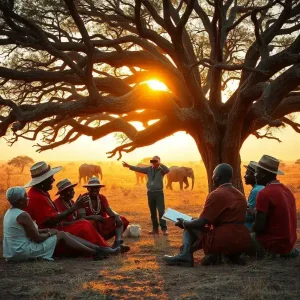
Anthropological travel takes this immersion a step further, inviting you to peel back the layers of a culture like the pages of a book written in the language of human experience. It’s not about ticking off landmarks or snapping photos for social media; it’s about understanding—the kind that comes from sitting in a circle with indigenous elders as they share the oral histories of their people, or learning the intricate steps of a traditional dance that has been performed for centuries. This is travel as education, but not the kind that happens in a classroom. It’s education that happens in the field, where the world itself is the teacher.
In the highlands of Guatemala, the Maya people welcome travelers into their homes, not as guests, but as family. You’ll grind corn for tortillas, weave textiles on backstrap looms, and listen to the stories of a culture that has thrived for millennia despite colonization and oppression. Here, anthropology isn’t an academic exercise—it’s a human one. You’re not just learning about the Maya; you’re learning from them, and in doing so, you’re forging a connection that transcends time and geography.
This is the essence of transformative travel experiences—journeys that don’t just change where you go, but who you are. When you return home, you don’t just bring back souvenirs; you bring back a piece of the world that has become a part of you. The stories you’ve heard, the hands you’ve held, the traditions you’ve participated in—they linger in your memory like the aftertaste of a fine wine, complex and intoxicating.
The Unseen Threads: How Community-Led Tourism Weaves Connection
At the heart of these experiences is community-led tourism, a model that flips the script on traditional travel. Instead of outsiders dictating what a destination should offer, the community itself takes the reins, crafting experiences that reflect their values, their history, and their vision for the future. This isn’t tourism as consumption; it’s tourism as collaboration. When you stay in a family-run guesthouse in a remote village, your money doesn’t disappear into the pockets of a multinational corporation. It stays local, funding schools, preserving traditions, and empowering the people who call that place home.
In the rice terraces of Bali, the Subak system—a thousand-year-old cooperative irrigation method—isn’t just a relic of the past. It’s a living, breathing example of sustainable tourism practices in action. Farmers invite travelers to participate in the planting and harvesting of rice, not as a gimmick, but as a way to share their way of life. You’ll walk through emerald-green fields, your feet sinking into the mud, your hands working alongside locals who have tilled this land for generations. The lesson isn’t just about agriculture; it’s about community, about the delicate balance between humans and nature, about the wisdom of working with the earth rather than against it.
The Slow Burn of Discovery: Why Off the Beaten Path Matters
There’s a reason why the most profound travel experiences often happen off the beaten path. It’s not just about avoiding crowds; it’s about discovery, about the thrill of stumbling upon something that feels like it was meant just for you. In the quiet corners of the world, where mass tourism hasn’t yet left its mark, you’ll find the kind of authenticity that can’t be staged. The old man playing a wooden flute in a Peruvian plaza, the woman selling handmade lace in a Croatian village, the fisherman mending his nets on a Greek island—these are the moments that linger, the ones that make you feel like you’ve glimpsed something rare and precious.
But off-the-beaten-path travel isn’t just about what you see; it’s about how you feel. It’s the hush of a forest at dawn, the warmth of a stranger’s smile, the taste of a meal cooked with ingredients grown in a backyard garden. It’s the realization that the world is far bigger, far richer, and far more interconnected than you ever imagined. And when you return home, you carry that realization with you, like a secret you’re eager to share.
Travel, at its best, is a dialogue—a conversation between you and the world. Interactive historical tours and anthropological travel don’t just facilitate that dialogue; they deepen it, turning fleeting encounters into lasting connections. They remind us that the past isn’t something to be relegated to museums or history books. It’s alive, it’s breathing, and it’s waiting for us to listen. And when we do, we don’t just learn about the world; we learn about ourselves. The stories we hear become the stories we tell, and in that exchange, something beautiful happens: we become part of the story, too. The trails we walk aren’t just paths through the earth; they’re pathways into the heart of what it means to be human. And perhaps, if we listen closely enough, we’ll hear the whisper of our own place in the grand, unfolding narrative of time.