The Unseen Threads: How Anthropological Travel and Adventure Skill Workshops Are Weaving the Fabric of Transformative Journeys

The world is not a map to be unfolded, nor a checklist of landmarks to be ticked off in haste. It is a living tapestry, woven with the threads of human stories, ancient traditions, and the raw, untamed beauty of landscapes that have shaped civilizations. To travel is not merely to move through space—it is to step into the rhythm of a place, to feel its pulse beneath your feet, and to let its stories seep into your bones. This is the essence of anthropological travel, a form of exploration that transcends the superficial and dives deep into the soul of a culture, revealing the unseen threads that bind humanity together.
The Alchemy of Immersion: Beyond the Surface of Sightseeing
Imagine standing in the heart of a remote village in the Peruvian Andes, where the air is thin and the mountains rise like ancient sentinels. The villagers do not perform for you; they simply live, and in their living, they invite you to participate. You learn to weave textiles using techniques passed down through generations, your fingers fumbling at first, then gradually finding the rhythm of the loom. The wool is coarse beneath your touch, dyed with pigments extracted from local plants, each color telling a story of the earth. This is not a staged cultural performance—it is an authentic local interaction, a moment where the boundaries between traveler and host dissolve, and you become, even if just for a day, a part of their world.
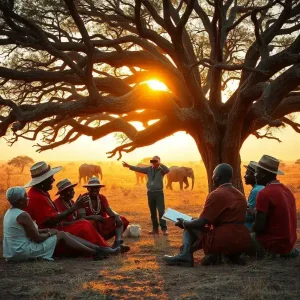
Anthropological travel is not about observing from a distance. It is about rolling up your sleeves, sitting by the fire, sharing a meal, and listening—not just with your ears, but with your heart. It is about recognizing that every gesture, every ritual, every seemingly mundane task is a thread in the larger fabric of a community’s identity. When you travel this way, you do not just see a place; you feel it, and in doing so, you begin to understand that the world is far richer, far more interconnected than you ever imagined.
The Forge of Adventure: Where Skills Become Stories
There is a quiet revolution happening in the way we travel—one that replaces passive observation with active participation. Adventure skill workshops are at the forefront of this movement, offering travelers the chance to learn the crafts, trades, and survival techniques that have sustained communities for centuries. These are not mere activities to fill an itinerary; they are gateways to transformation, where the skills you acquire become the stories you carry home.
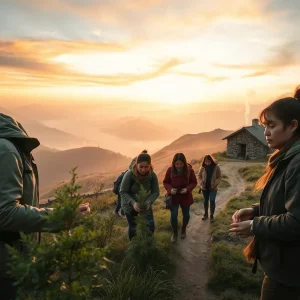
Picture yourself in the dense jungles of Costa Rica, where the air hums with the chorus of howler monkeys and the scent of damp earth fills your lungs. Here, a local guide—perhaps a former logger turned conservationist—teaches you how to track wildlife, not as a tourist with a camera, but as someone who must rely on their senses to navigate the wilderness. You learn to read the signs: the snapped twig, the disturbed leaves, the faintest imprint in the mud. Your hands tremble as you set up a makeshift shelter using only the materials the forest provides, your heart pounding with a mix of fear and exhilaration. This is adventure-based learning in its purest form—a classroom without walls, where the lessons are written in the language of the wild.
Or consider the windswept highlands of Scotland, where you join a blacksmith in his forge, the heat of the fire searing your cheeks as you hammer molten metal into shape. The rhythm of the hammer, the hiss of the steam, the weight of the anvil beneath your hands—these sensations anchor you in the moment, connecting you to a craft that has been practiced for millennia. When you leave, you do not just take a piece of metal with you; you take the memory of the fire, the sound of the hammer, and the knowledge that you, too, can shape something enduring from raw materials.
The Ripple Effect: How Transformative Travel Changes More Than Just the Traveler
When travel is approached with intention, it becomes a force for good—not just for the traveler, but for the communities they visit. Community-led tourism ensures that the benefits of travel flow back into the hands of those who call these places home. It is a model that prioritizes mutual respect, fair compensation, and the preservation of cultural and natural heritage. In this way, travel becomes a tool for regeneration, a means of supporting local economies while fostering a deeper understanding between people.
Take, for example, the homestays in the rural villages of Rajasthan, where families open their doors to travelers not as a business transaction, but as an exchange of stories and traditions. Here, you do not stay in a sterile hotel room; you sleep on a charpoy under the stars, share meals cooked over an open fire, and listen to the elders recount tales of kings and warriors. The money you spend goes directly to the family, funding education for their children or the restoration of their ancestral home. This is regenerative travel planning in action—a way of traveling that leaves a place better than you found it, not just environmentally, but socially and culturally as well.
The Slow Unfolding: Why the Journey Matters More Than the Destination
In a world that moves at breakneck speed, the slow travel movement is a radical act of resistance. It is a rejection of the rushed, the superficial, the Instagram-perfect in favor of the unhurried, the meaningful, the deeply human. Slow travel is not about how many places you can see in a week, but about how deeply you can connect with a single place in a lifetime. It is about lingering in a café in Lisbon, watching the trams rattle by as you sip your coffee, or spending an afternoon in a Kyoto garden, where the art of raking sand becomes a meditation on impermanence.
This kind of travel requires patience, curiosity, and a willingness to let go of the need for constant stimulation. It is about embracing the discomfort of not knowing, the beauty of getting lost, and the joy of stumbling upon something unexpected. When you travel slowly, you give yourself the space to truly see—to notice the way the light filters through the leaves in a Moroccan souk, or the way the fishermen in a Greek village mend their nets with calloused hands. These are the moments that stay with you long after the trip is over, the ones that shape not just your memories, but your very sense of self.
The Unwritten Stories: Leaving Room for the Magic of the Unknown
Some of the most profound travel experiences are the ones that cannot be planned. They are the detours, the chance encounters, the moments of serendipity that arise when you step off the beaten path and into the unknown. Perhaps it is the elderly woman in a Sicilian village who invites you into her home for a glass of homemade wine, or the fellow traveler you meet on a train in India who becomes a lifelong friend. These are the stories that do not fit neatly into an itinerary, the ones that remind us that travel, at its core, is about connection.
When you approach travel with an open heart and a willingness to be transformed, you begin to see the world not as a series of destinations, but as a living, breathing entity—one that has the power to change you as much as you change it. The threads of anthropological insight, the skills forged in adventure workshops, the bonds formed in community-led homestays—these are the elements that weave together to create a tapestry of experiences far richer than any guidebook could ever capture. And when you return home, you carry that tapestry with you, a reminder that the world is not just a place to visit, but a place to belong.