The Soul of the Village: How Community-Led Tourism and Culinary Heritage Are Crafting the Future of Authentic Travel
There is a quiet revolution unfolding in the heart of the world’s most unassuming corners—a movement that whispers of connection, of hands calloused by tradition, and of flavors that carry the weight of centuries. It is not the kind of travel that rushes from one landmark to the next, nor the sort that checks off bucket-list boxes with the efficiency of a factory line. Instead, it is the slow, deliberate unraveling of a place through the eyes of those who call it home. This is the essence of community-led tourism, where the soul of a destination is not just observed but felt, tasted, and lived.
The Alchemy of Authentic Interaction
Imagine stepping into a village where the air hums with the rhythmic clatter of a wooden loom, where the scent of woodsmoke and spices curls through narrow alleyways, and where the first greeting you receive is not from a tour guide but from a grandmother whose hands have kneaded dough for generations. This is not a staged performance for tourists; it is life, unfiltered and unapologetically real. Community-led tourism strips away the veneer of commercialized travel, inviting visitors to become temporary kin rather than mere spectators. Here, the stories are not recited from a script but shared over steaming cups of tea, where the history of a place is not confined to a museum but woven into the fabric of daily existence.
In the highlands of Peru, the Quechua people of Chinchero open their homes to travelers, teaching them the ancient art of textile weaving using natural dyes sourced from the very earth beneath their feet. The threads they spin are not just fibers but narratives—stories of resilience, of conquest and survival, of a culture that refused to be erased. Similarly, in the floating villages of Cambodia’s Tonlé Sap Lake, families invite visitors into their stilted homes, where the gentle lapping of water against wooden pillars becomes the soundtrack to a lesson in sustainable living. These are not just experiences; they are exchanges, where the currency is not money but mutual respect and understanding.
The Feast of Heritage: Where Every Bite Tells a Story
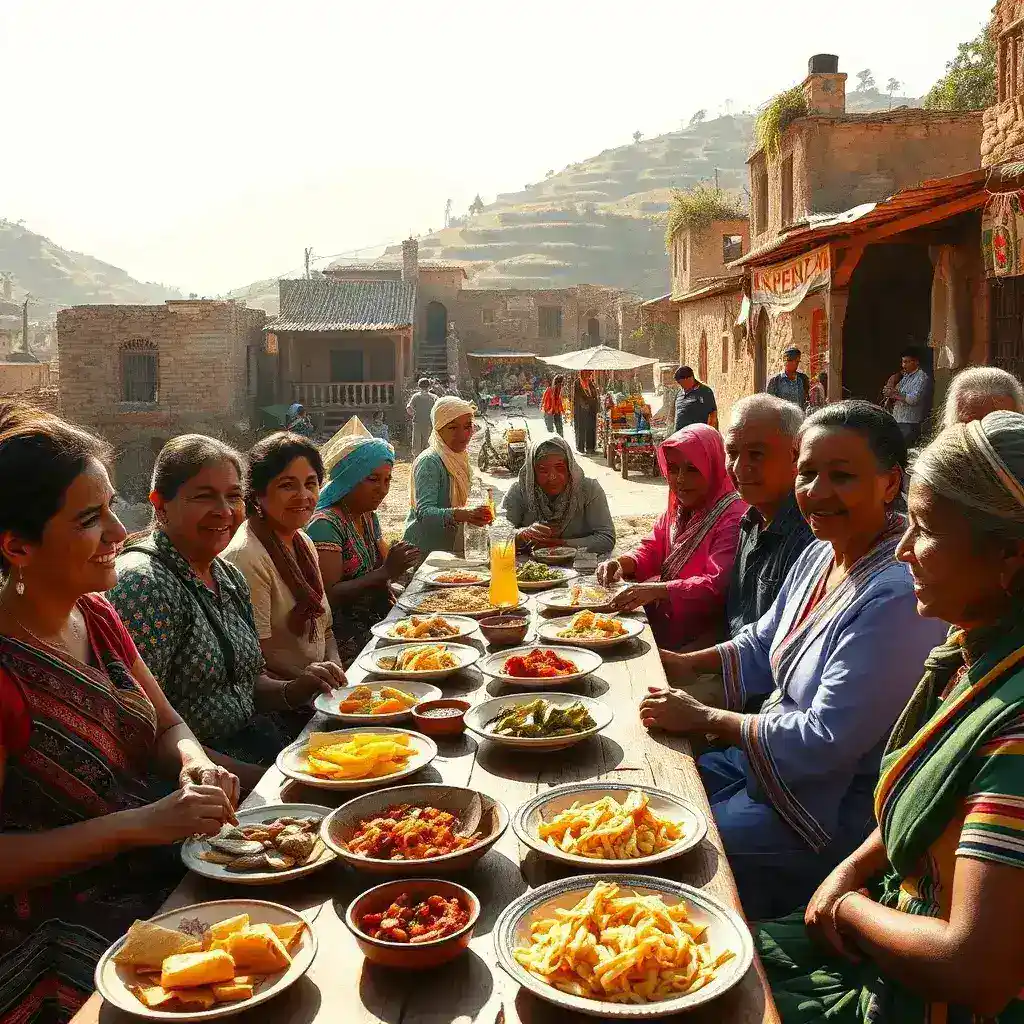
If the soul of a culture can be tasted, then culinary heritage tours are the most intimate form of travel. There is something profoundly human about breaking bread with strangers, about the way a shared meal can dissolve barriers and forge connections. In the narrow streets of Naples, Italy, nonnas (grandmothers) invite travelers into their kitchens to learn the sacred art of making pasta from scratch. The flour dusts their hands like a badge of honor, and the stories they share—of wartime rationing, of love letters written on scraps of paper, of recipes passed down through whispered secrets—are as much a part of the dish as the tomatoes simmering on the stove.
In Japan, the art of kaiseki—a multi-course meal that is as much about aesthetics as it is about taste—becomes a gateway to understanding the nation’s reverence for seasonality and harmony. Chefs who have spent decades perfecting their craft guide visitors through the meticulous preparation of each dish, explaining how the arrangement of food on the plate reflects the changing landscapes of the natural world. Meanwhile, in the spice markets of Zanzibar, the air is thick with the scent of cloves, cinnamon, and cardamom, and local guides recount tales of Arab traders, Portuguese explorers, and the Swahili coast’s role as a crossroads of civilizations. Here, food is not just sustenance; it is a living archive of history, trade, and identity.
The Slow Travel Manifesto: Why Less Is More
The slow travel movement is not merely about dawdling; it is a rebellion against the tyranny of the itinerary. It is the understanding that the most profound moments of travel often occur when we allow ourselves to be still—when we linger in a café long enough to watch the morning light spill across a cobblestone square, or when we wander without a map, trusting that the detours will lead us to something far more meaningful than the next tourist attraction. Community-led tourism and culinary heritage experiences thrive in this space of slowness, where the pressure to see everything is replaced by the desire to feel everything.
Consider the digital nomad retreats nestled in the misty hills of Chiang Mai, Thailand, where travelers trade the frenetic pace of city life for the meditative rhythm of rural existence. Here, mornings begin with alms-giving ceremonies to Buddhist monks, and afternoons are spent learning the art of Thai cooking from local chefs who source ingredients from their own gardens. The goal is not to cram as many activities into a day as possible but to savor the quiet moments—the way the mist clings to the mountains at dawn, the sound of a mortar and pestle grinding spices, the laughter of children playing in the rice fields. In this space, travel becomes less about escape and more about immersion, less about consumption and more about contribution.
The Ripple Effect: How Community-Led Tourism Transforms Lives
The true magic of community-led tourism lies in its ability to create a ripple effect that extends far beyond the individual traveler. When done thoughtfully, it becomes a force for economic empowerment, cultural preservation, and environmental stewardship. In the Maasai villages of Kenya and Tanzania, tourism initiatives led by the community have provided alternative sources of income to traditional practices like cattle herding, reducing pressure on fragile ecosystems. Visitors who participate in these programs—whether by learning traditional beadwork, joining a guided safari led by Maasai warriors, or staying in eco-friendly manyattas (homesteads)—are not just observers but active participants in a model of travel that prioritizes people and planet over profit.
Similarly, in the indigenous communities of the Amazon rainforest, eco-tourism projects have become a lifeline for preserving both the environment and ancestral knowledge. Travelers who venture into these remote regions are not just treated to breathtaking landscapes but are also educated on the medicinal properties of plants, the importance of sustainable harvesting, and the threats posed by deforestation. The knowledge they gain is not just academic; it is visceral, rooted in the lived experiences of the people who have called the rainforest home for generations. When these travelers return to their own communities, they carry with them not just souvenirs but a deeper understanding of the interconnectedness of all life.
The Unwritten Promise of Regenerative Travel
Regenerative travel is not a trend; it is a paradigm shift. It is the recognition that travel should leave a place better than it found it—not just environmentally but socially and culturally as well. Community-led tourism and culinary heritage experiences are at the forefront of this movement, offering a blueprint for how travel can be a force for good. When a traveler sits at a family’s table in Oaxaca, Mexico, learning to make mole negro from a recipe that has been perfected over centuries, they are not just tasting a dish; they are participating in the preservation of a culinary tradition. When they purchase handwoven textiles from a cooperative in Guatemala, they are not just buying a souvenir; they are supporting a system that empowers women and sustains local economies.
This is the future of travel: not as a transaction but as a relationship, not as a means of escape but as a path to deeper connection. It is the understanding that the most transformative experiences are not the ones we capture in photographs but the ones that change us from the inside out. When we travel with intention, when we seek out the stories that are often overlooked, when we allow ourselves to be guided by the hands of those who know a place best, we do more than visit a destination—we become part of its story. And in doing so, we find that the greatest adventure of all is not in the places we go but in the people we meet along the way, and the ways in which they, in turn, become a part of us.