The Whispering Sands: How Coastal Van Life and Mindful Trekking Are Crafting a New Dawn of Regenerative Adventure

The salt-kissed breeze carries whispers of a revolution, one where the open road and the untamed wild converge in a dance of freedom and responsibility. This is the era of coastal van life and mindful trekking, where every mile traveled is a step toward healing the planet, and every horizon crossed is an invitation to reconnect with the earth’s ancient rhythms. It’s not just about the destination; it’s about the journey itself—how we move, how we stay, and how we leave the places we visit more vibrant than we found them.
The Call of the Open Road
Imagine waking up to the sound of waves crashing against the shore, the golden sun spilling through the windows of your van, painting the interior in hues of amber and rose. Coastal van life isn’t just a trend; it’s a lifestyle that beckons the soul to wander without leaving a trace. These rolling sanctuaries, often outfitted with solar panels, composting toilets, and rainwater harvesting systems, are a testament to human ingenuity meeting environmental stewardship. They allow us to chase the sun along endless coastlines, from the rugged cliffs of Big Sur to the serene beaches of Bali’s Bukit Peninsula, all while treading lightly on the earth.
But van life is more than just a means of travel—it’s a philosophy. It’s about slowing down, embracing minimalism, and finding richness in simplicity. The road becomes a teacher, offering lessons in adaptability, resilience, and gratitude. Every sunset viewed from a new vantage point is a reminder of the world’s vast beauty, and every campfire shared with fellow travelers is a celebration of community. This is the heart of regenerative travel: a way of exploring that nourishes both the traveler and the land.
The Path Less Traveled: Mindful Trekking
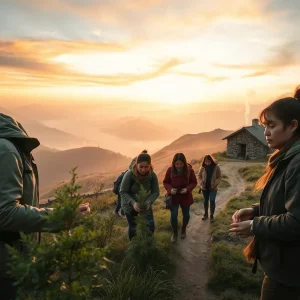
If van life is the vessel, then mindful trekking is the pilgrimage. There’s something sacred about setting foot on a trail, where the only sounds are the rustling leaves and the distant call of wildlife. Mindful trekking is about more than just covering distance; it’s about being present, about feeling the earth beneath your boots and the wind on your skin. It’s a practice in awareness, where every step is an opportunity to deepen your connection to the natural world.
Take the volcanic trails of Bali, for instance. Hiking Mount Batur at dawn isn’t just a physical challenge; it’s a spiritual awakening. As you ascend through the mist, the world below unfolds like a living painting—terraced rice fields glistening with morning dew, traditional villages humming with life, and the distant ocean shimmering under the first light of day. These moments are transformative, reminding us of our place in the grand tapestry of life. And when we trek with intention, we’re not just passing through; we’re becoming part of the landscape, leaving it better than we found it by picking up litter, respecting local customs, and supporting eco-conscious guides.
The Alchemy of Adventure and Sustainability
What makes coastal van life and mindful trekking so powerful is their ability to merge adventure with sustainability. These experiences prove that we don’t have to sacrifice comfort or excitement to travel responsibly. In fact, the most memorable journeys are often the ones where we’ve immersed ourselves fully in the environment, whether it’s by sleeping under the stars in a van or waking up in a eco-friendly glamping site nestled in the jungle. The key is to seek out experiences that align with regenerative principles—places and practices that restore, rather than deplete, the earth’s resources.
Consider the boutique wellness resorts dotting Bali’s coastline, where luxury meets sustainability. These sanctuaries are designed to harmonize with their surroundings, using locally sourced materials, renewable energy, and water conservation systems. They offer a space for travelers to rejuvenate while also giving back to the community through initiatives like coral reef restoration, organic farming, and cultural preservation. It’s a model of travel that enriches both the guest and the host, creating a cycle of positive impact that extends far beyond the resort’s walls.
Weaving Community into the Journey
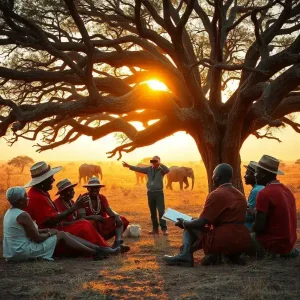
At the heart of regenerative travel is community—both the one we find on the road and the one we leave behind. Coastal van life and mindful trekking foster connections that transcend borders. Whether it’s sharing a meal with fellow van dwellers at a beachside potluck or learning traditional weaving techniques from a Balinese artisan, these interactions remind us that travel is as much about people as it is about places. They challenge us to see the world through different eyes, to listen to stories that have been passed down for generations, and to contribute our own chapter to the ongoing narrative of cultural exchange.
Digital nomad hubs, like those sprouting up in Bali’s Canggu or Portugal’s Algarve, are another example of how travel can build bridges. These spaces bring together remote workers from around the globe, creating micro-communities where ideas, skills, and passions collide. They’re a testament to the fact that work and wanderlust can coexist, and that productivity doesn’t have to come at the expense of the planet. By choosing to work from eco-friendly co-living spaces or sustainable cafes, digital nomads are redefining what it means to live and work in harmony with the earth.
The Future of Travel: A Regenerative Legacy
The road ahead is paved with possibility. As more travelers embrace the principles of regenerative tourism, the industry is evolving to meet this demand. From off-grid camping sites powered by renewable energy to heritage homestays that preserve local traditions, the options for mindful exploration are expanding. Even luxury villas in Bali are being reimagined with sustainability in mind, incorporating green building certifications, permaculture gardens, and zero-waste initiatives. These innovations prove that responsible travel doesn’t mean compromising on comfort or beauty—it means redefining them.
But the true magic of coastal van life and mindful trekking lies in their ability to transform us. They teach us to move through the world with intention, to seek out experiences that nourish the soul, and to leave every place a little better than we found it. They remind us that travel is not just about seeing the world, but about becoming part of it—about weaving our stories into the fabric of the earth and carrying its lessons with us long after we’ve returned home. The open road and the untamed trail are calling, inviting us to embark on a journey that doesn’t just change the way we see the world, but the way we live in it.
As the sun sets over the horizon, casting long shadows across the sand, there’s a quiet understanding that the future of travel isn’t just about where we go, but how we choose to get there. It’s about the footsteps we leave behind, the communities we uplift, and the planet we protect. The whispers of the wild are growing louder, urging us to listen, to act, and to travel in a way that honors the earth and all who call it home. The journey is just beginning, and every mile is an opportunity to make it count.