The Vanishing Trails: Where Mountain Trekking and Marine Conservation Rewrite the Rules of Adventure
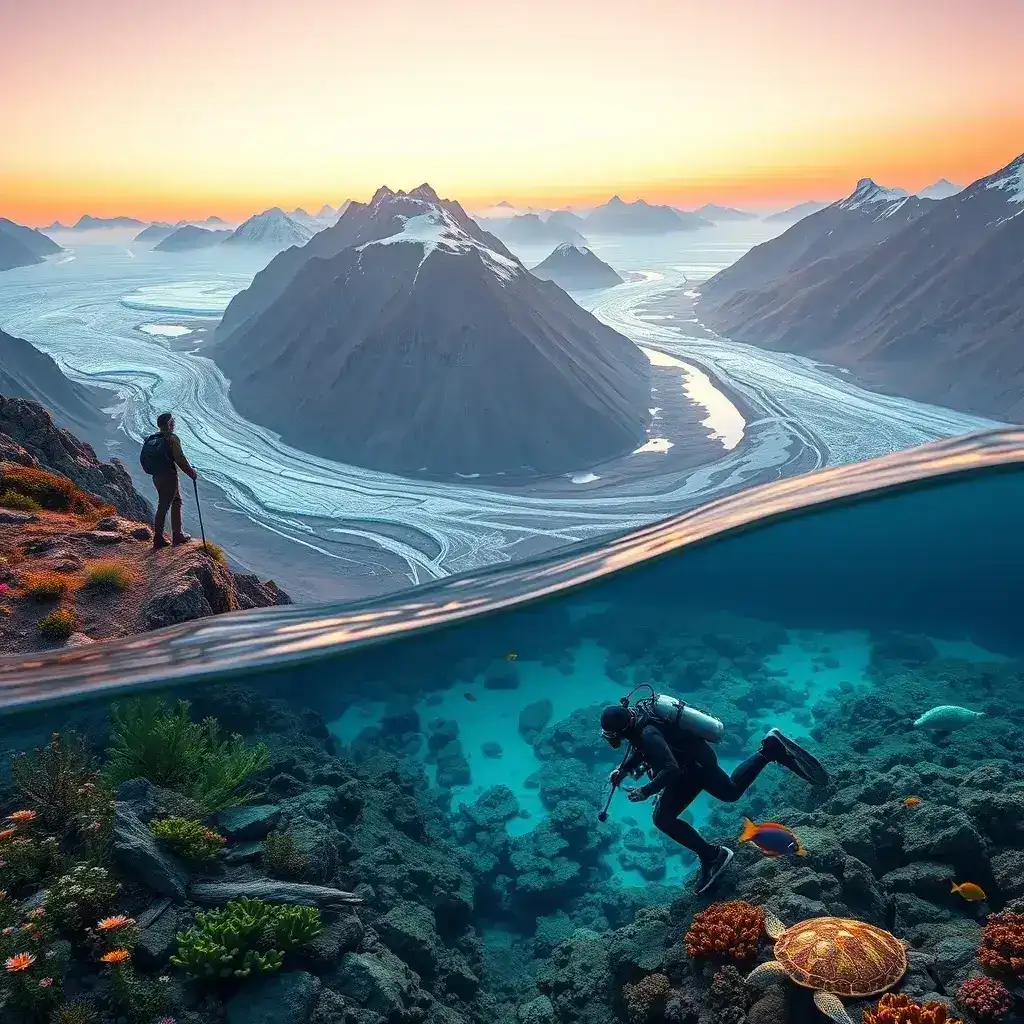
The first time I stood at the edge of a glacier, its icy blue heart cracking under the weight of time, I realized how fragile the wild truly is. The air was thin, sharp with the scent of snow and pine, and the silence was so profound it felt like the earth itself was holding its breath. This was not just a mountain—it was a living archive of our planet’s history, a testament to the slow, relentless dance of ice and stone. But as I traced the path of ancient meltwater down to the valleys below, I couldn’t shake the feeling that I was witnessing something slipping away.
The Mountains: Where Time Moves Like a Glacier
There’s a rhythm to high-altitude trekking that hums in your bones. The crunch of gravel underfoot, the way the wind carries the scent of wild thyme and damp earth, the gradual shift from emerald valleys to the stark, sun-bleached bones of the peaks. Each step is a conversation with the land, a negotiation between human curiosity and the raw, unyielding power of nature. But the trails we walk are not just paths—they are lifelines. They connect us to the stories of those who came before, to the herders and explorers who carved routes through the wilderness long before GPS or Gore-Tex existed.
Yet, these trails are changing. Glaciers that once stretched like frozen rivers are now retreating at alarming speeds, leaving behind moraines of rubble and lakes that swell with the threat of sudden, catastrophic floods. The permafrost, that invisible glue holding the mountains together, is thawing, turning once-stable slopes into landslide zones. The very act of trekking, of placing our boots on these ancient paths, now carries a weight of responsibility. How do we honor the wild while ensuring it remains wild for those who follow?
The Ocean’s Pulse: Where Every Ripple Tells a Story
If the mountains are the earth’s bones, the ocean is its blood—a vast, pulsing network of currents and tides that sustain life in ways we are only beginning to understand. My first descent into a coral reef was like stepping into another world. The water was so clear it felt like flying, and the reef itself was a riot of color: electric blues, sunburst yellows, deep purples that seemed to glow from within. Fish darted between the branches of coral like birds in a forest, and the silence was broken only by the distant crackle of shrimp and the occasional hum of a passing boat.
But beneath the beauty, there was a quiet tragedy. The coral, bleached and brittle, bore the scars of warming waters and careless anchors. Plastic debris, carried by currents from distant shores, tangled in the reef like a grotesque parody of seaweed. The fish were fewer than they should have been, their numbers dwindling under the pressure of overfishing and habitat loss. It was a stark reminder that the ocean is not an infinite resource—it is a living, breathing entity, and it is hurting.
The Unlikely Alliance: Trekkers and Conservationists
What do a mountaineer and a marine biologist have in common? More than you might think. Both are explorers of the edge, drawn to the places where the earth reveals its most raw and unfiltered self. Both understand the delicate balance of ecosystems that exist on the knife’s edge of survival. And both are increasingly finding themselves on the front lines of conservation, whether they set out to be or not.
In the mountains, trekkers are becoming citizen scientists, documenting glacial retreat, monitoring wildlife populations, and advocating for protected areas. In the ocean, divers are joining coral restoration projects, removing invasive species, and collecting data on marine health. The line between adventure and activism is blurring, and that’s a good thing. Because the wild doesn’t just need our awe—it needs our action.
Rewriting the Rules of Adventure
Adventure travel has long been about conquest—the summit push, the first ascent, the thrill of standing where no one else has stood. But what if the real adventure is not in taking from the wild, but in giving back? What if the measure of a journey is not the height of the peak or the depth of the dive, but the positive impact left behind?
Sustainable tourism is not a buzzword; it’s a necessity. It’s choosing lodges that run on solar power and serve locally sourced food. It’s opting for guides who prioritize low-impact trekking and educate their clients on Leave No Trace principles. It’s supporting marine conservation projects that restore coral reefs and protect endangered species. It’s recognizing that every choice we make—from the gear we buy to the trails we walk—has a ripple effect on the planet.
The Trails Ahead: A Call to the Wild-Hearted
The next time you lace up your hiking boots or strap on your dive fins, ask yourself: What story do I want to leave behind? Will your footprints fade with the next rain, or will they be part of a larger narrative of stewardship and respect? The wild is not a backdrop for our adventures—it is the reason we adventure in the first place. And it is counting on us to protect it.
The glaciers are melting, the reefs are bleaching, and the trails we love are at risk of vanishing forever. But there is still time. There is still hope. The mountains and the ocean have always been our greatest teachers, showing us the limits of our strength and the boundless capacity of our spirit. Now, they are asking us to step up—not just as adventurers, but as guardians. The wild is calling. Will we answer?