Life of the Tengger Bromo Tribe: Traditions, Culture, and Community
Nestled in the highlands of East Java, Indonesia, the Tenggerese people have carved out a life of harmony and resilience around the majestic Mount Bromo. This indigenous community, numbering around 100,000, is a living testament to the enduring power of tradition, culture, and communal bonds. Their unique way of life, deeply intertwined with the volcanic landscape, offers a fascinating glimpse into a world where ancient beliefs and modern realities coexist.
The Roots of the Tenggerese People
The Tenggerese trace their origins to the ancient Majapahit Empire, one of the most powerful Hindu-Buddhist kingdoms in Indonesian history. As the empire declined in the 16th century, many of its people fled to the remote highlands of East Java, seeking refuge in the shadow of Mount Bromo. Over centuries, they developed a distinct identity, blending elements of Hinduism and Buddhism with animist traditions, creating a spiritual tapestry that is uniquely their own. Today, the Tenggerese are one of the few remaining Hindu communities in predominantly Muslim Indonesia, a testament to their unwavering commitment to their heritage.
A Spiritual Connection to the Land
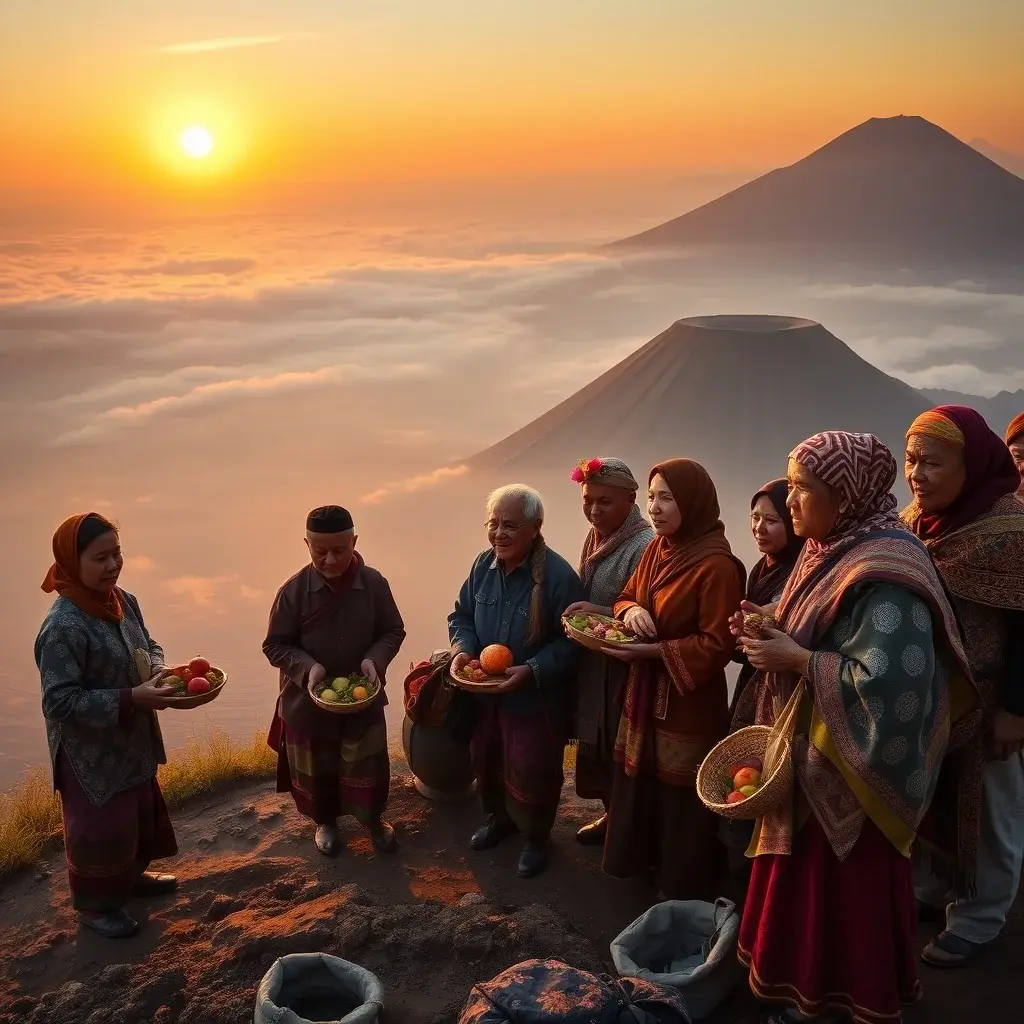
For the Tenggerese, Mount Bromo is not merely a geographical feature; it is a sacred entity, a divine force that shapes their lives and beliefs. Their spiritual practices revolve around the volcano, which they believe is the dwelling place of gods and ancestral spirits. The most significant ceremony in Tenggerese culture is the Yadnya Kasada, a month-long festival held annually to honor the gods and seek their blessings. During this time, the Tenggerese gather at the crater of Mount Bromo to offer fruits, vegetables, livestock, and even money as sacrifices, casting them into the volcano’s depths as a sign of devotion and gratitude.
“The Kasada ceremony is the heart of our culture,” says Pak Wayan, a local elder and spiritual leader. “It is a time for us to renew our connection with the gods, to ask for protection, and to give thanks for the blessings we have received. Without this ceremony, we would lose a part of who we are.” The festival attracts thousands of visitors each year, drawn by the spectacle of devotion and the breathtaking beauty of the Bromo-Tengger-Semeru National Park.
Daily Life in the Highlands
Life in the Tengger highlands is one of simplicity and hard work. The community primarily sustains itself through agriculture, cultivating crops like potatoes, cabbage, and carrots in the fertile volcanic soil. The cool climate and rich earth make the region ideal for farming, and the Tenggerese take great pride in their ability to live off the land. Many families also raise livestock, such as cows and goats, which provide both food and additional income.
Despite the challenges of living in a remote and often harsh environment, the Tenggerese have developed a strong sense of community. Villages are tightly knit, with neighbors supporting one another in times of need. Traditional gotong royong (mutual cooperation) is still practiced, where community members come together to work on projects like building homes, repairing roads, or preparing for festivals. This spirit of collaboration ensures that no one is left behind and that the community thrives as a whole.
The Role of Women in Tenggerese Society
Women play a vital role in Tenggerese society, both within the household and in the broader community. They are often the backbone of the family, managing finances, raising children, and overseeing agricultural activities. In many cases, women also take on leadership roles in religious ceremonies and community events, ensuring that traditions are passed down to the next generation. “Our mothers and grandmothers are the keepers of our culture,” explains Ibu Sari, a local teacher. “They teach us the old stories, the songs, and the rituals that define who we are. Without them, our traditions would fade away.”
Education is highly valued among the Tenggerese, and women are increasingly pursuing higher education and careers outside the village. However, they remain deeply connected to their roots, often returning to their communities to share their knowledge and skills. This balance between tradition and modernity is a hallmark of Tenggerese society, allowing them to adapt to changing times while preserving their cultural identity.
The Impact of Tourism on the Tenggerese Community
In recent decades, Mount Bromo has become one of Indonesia’s most popular tourist destinations, attracting visitors from around the world. While tourism has brought economic opportunities to the Tenggerese, it has also posed challenges to their way of life. Many locals have found work as guides, drivers, or vendors, capitalizing on the influx of visitors. However, the rapid growth of tourism has also led to environmental concerns, such as pollution and the degradation of sacred sites.
“Tourism has been a double-edged sword for us,” admits Pak Made, a local guide. “On one hand, it has improved our livelihoods and allowed us to share our culture with the world. On the other hand, it has brought changes that threaten our traditions and the environment we hold sacred. We must find a way to balance these two realities.” Efforts are underway to promote sustainable tourism, with community-led initiatives aimed at preserving the natural beauty of the region and respecting Tenggerese customs. These include limiting the number of visitors during sacred ceremonies and educating tourists about the importance of cultural sensitivity.
Preserving a Cultural Legacy
As the world around them changes, the Tenggerese are faced with the challenge of preserving their cultural legacy for future generations. Young Tenggerese are increasingly exposed to outside influences, from education to technology, which can sometimes lead to a disconnect from their heritage. However, many are finding ways to bridge the gap between tradition and modernity, using social media and other platforms to share their culture with a global audience.
Local schools have also begun incorporating Tenggerese language, history, and traditions into their curricula, ensuring that children grow up with a strong sense of identity. Community leaders are working to document oral histories, songs, and rituals, creating a record of their culture that can be passed down to future generations. These efforts are crucial in maintaining the vibrancy of Tenggerese culture in an ever-changing world.
The Tenggerese people stand as a reminder of the resilience of indigenous cultures, their ability to adapt without losing sight of who they are. Their lives, deeply rooted in the sacred landscape of Mount Bromo, offer a powerful example of how tradition and community can thrive in the face of modernity. As the sun rises over the volcanic peaks, casting a golden glow on the highlands, the Tenggerese continue to honor their past while embracing the future, their spirits as enduring as the land they call home.