The Soul of the Living Classroom: Where Adventure-Based Learning and Wildlife Conservation Tourism Craft the Future of Regenerative Education
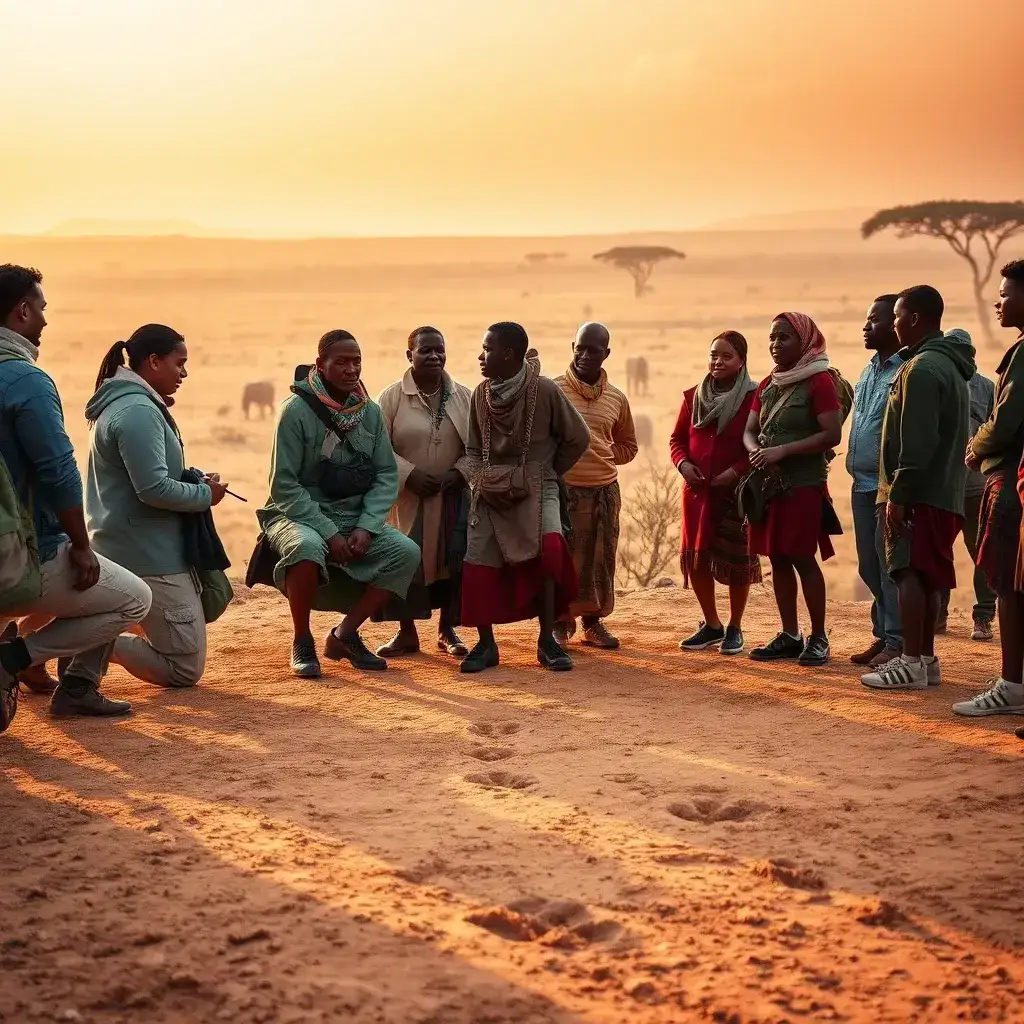
The first light of dawn spills over the savanna, painting the golden grasses in hues of amber and rose. A group of travelers, not tourists, kneels in the dust, their fingers tracing the delicate imprints of a lion’s paw left in the earth just hours before. Their guide, a Maasai elder with eyes that have witnessed generations of wildlife migrations, speaks in a voice as steady as the ancient baobabs dotting the horizon. “This track,” he says, “is not just a mark in the soil. It is a story. And today, you become part of it.” This is not a safari. This is a living classroom, where the wild becomes the teacher, and the lesson is written in the language of the earth itself.
The Alchemy of Adventure and Education
Adventure-based learning is not a new concept, but its evolution into a regenerative force is nothing short of revolutionary. It transcends the traditional boundaries of education, transforming travel into an immersive, hands-on experience where every step is a lesson, and every challenge is an opportunity for growth. Imagine learning to navigate by the stars in the Atacama Desert, where the night sky is so vast it feels like you could reach out and touch the Milky Way. Or mastering the art of sustainable fishing with indigenous communities in the Amazon, where the river is both classroom and lifeline. These experiences do more than teach skills—they forge a deep, unshakable connection to the places and people that make our world so richly diverse.
What sets adventure-based learning apart is its ability to merge the thrill of discovery with the humility of understanding. It’s one thing to read about the delicate balance of an ecosystem in a textbook; it’s another entirely to stand in the middle of a reforestation project in Costa Rica, your hands buried in the soil as you plant a sapling that will one day tower over the rainforest. The sweat on your brow, the ache in your muscles, the quiet satisfaction of knowing you’ve contributed to something greater than yourself—these are the moments that turn travelers into stewards of the earth.
The Wild as a Catalyst for Conservation
Wildlife conservation tourism is often misunderstood as a passive experience, where travelers observe animals from the safety of a jeep, snapping photos through a telephoto lens. But the most transformative conservation experiences are those that demand active participation. Picture yourself in the rugged highlands of Rwanda, not just trekking to see mountain gorillas, but spending days with researchers, learning to track their movements, understanding their social structures, and contributing to data that will help protect them for generations to come. This is conservation in its purest form: a symbiotic relationship where humans give as much as they take.
The magic of these experiences lies in their ability to turn abstract concepts into visceral realities. When you witness a sea turtle hatchling make its perilous journey to the ocean in Costa Rica, guided by the light of the moon, you understand the fragility of life in a way no documentary could ever convey. When you help rebuild a coral reef in the Maldives, your fingers brushing against the vibrant polyps as they take root, you grasp the interconnectedness of all living things. These are not just moments; they are awakenings, where the line between observer and participant blurs, and the traveler becomes an advocate for the wild.
The Ripple Effect of Regenerative Travel
The true power of adventure-based learning and wildlife conservation tourism lies in their regenerative potential. Unlike traditional tourism, which often extracts value from a destination, regenerative travel seeks to leave a place better than it was found. This philosophy is woven into every aspect of the experience, from the lodges built with locally sourced, sustainable materials to the community-led initiatives that ensure tourism dollars stay within the region. In Bhutan, for example, travelers don’t just hike through pristine landscapes—they participate in conservation projects, learn about the country’s unique Gross National Happiness philosophy, and contribute to the preservation of its cultural and natural heritage.
But the impact of regenerative travel extends far beyond the physical. It reshapes the way we see the world and our place in it. When you spend a week living with a Bedouin family in the Wadi Rum desert, sharing meals under a canopy of stars and listening to stories passed down through generations, you begin to understand that travel is not about ticking off destinations on a list. It’s about forging connections—with people, with nature, with the very essence of what it means to be alive. These connections don’t end when the trip does. They linger, shaping the choices we make long after we’ve returned home, from the products we buy to the causes we support.
The Classroom Without Walls
The most profound lessons are often the ones we don’t realize we’re learning. In the living classroom of the wild, education is not confined to four walls or dictated by a syllabus. It is fluid, dynamic, and deeply personal. A traveler might set out to learn about marine biology in the Galápagos Islands, only to find themselves captivated by the resilience of the local fishing communities fighting to protect their waters. Another might journey to the Arctic to study climate change, only to be humbled by the wisdom of the Inuit elders who have lived in harmony with the ice for centuries.
These experiences challenge us to think critically, to question our assumptions, and to see the world through new eyes. They teach us that travel is not a spectator sport—it is an active, ongoing dialogue with the planet and its inhabitants. And perhaps most importantly, they remind us that we are not separate from the natural world, but a part of it. When we stand on the edge of a cliff in Patagonia, the wind howling in our ears and the vastness of the landscape stretching out before us, we understand, on a cellular level, that we are both insignificant and essential. We are a single thread in the tapestry of life, and our choices matter.
As the sun dips below the horizon, casting long shadows across the savanna, the travelers gather around a fire, their faces illuminated by the flickering flames. The Maasai elder begins to sing, his voice rising and falling in a melody that has echoed through these lands for centuries. One by one, the travelers join in, their voices blending with his, a chorus of gratitude and wonder. They came seeking adventure, but they leave with something far greater: a sense of belonging, a deeper understanding of the world, and the unshakable knowledge that they are part of something vast and beautiful. The wild has taught them well, and now, they carry its lessons with them, like embers in their hearts, ready to ignite change wherever they go.