The Soul of the Hidden Path: How Experiential Eco-Tourism and Community-Led Storytelling Are Crafting the Future of Regenerative Travel

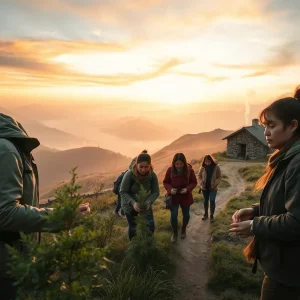
The first light of dawn spills over the mist-laden valleys, painting the landscape in hues of gold and amber. There, where the road dissolves into a narrow footpath, the real journey begins—not just through space, but through time. This is the essence of experiential eco-tourism: a voyage that transcends the superficial, inviting travelers to step into the living stories of the land and its people. It’s not about ticking off destinations on a checklist; it’s about feeling the pulse of a place, understanding its rhythms, and leaving it richer than you found it.
The Alchemy of Presence
In a world where travel has often been reduced to a series of Instagram moments, slow travel emerges as a radical act of resistance. It asks us to linger, to listen, to engage with the world in a way that is deliberate and deep. Imagine walking through the emerald terraces of a rice paddy in Bali, not as a spectator, but as a participant. Your guide isn’t just a voice in your ear reciting facts; they are a farmer, a storyteller, a guardian of traditions passed down through generations. They show you how to plant seedlings, how to read the whispers of the wind, how the land and the people are intertwined in an ancient dance. This is heritage interpretation at its most profound—where history isn’t confined to museums but lives in the hands of those who tend the soil, weave the textiles, and sing the songs of their ancestors.
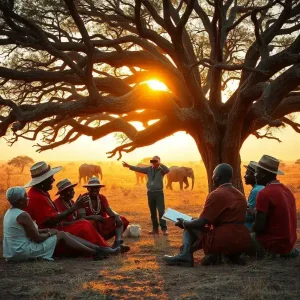
The magic of these experiences lies in their ability to transform. When you knead dough alongside a Sicilian nonna, her hands guiding yours, you’re not just learning to make pasta—you’re absorbing a piece of her soul. When you sit in a circle with Maasai elders, listening to tales of the savanna under a sky ablaze with stars, you’re not just hearing stories; you’re becoming part of a lineage that stretches back centuries. These moments are the threads that weave the tapestry of transformative travel, where every encounter leaves an indelible mark on your own narrative.
The Heartbeat of the Community
At the core of community-led tourism is a simple yet revolutionary idea: that the people who call a place home are its greatest storytellers. Unlike mass tourism, which often extracts more than it gives, this model is built on reciprocity. It’s about travelers contributing to the well-being of the communities they visit, whether through economic support, cultural exchange, or hands-on conservation efforts. Picture yourself in a remote village in the Peruvian Andes, where your stay funds a local school or a reforestation project. The money you spend doesn’t vanish into the pockets of multinational corporations; it stays within the community, fueling its growth and resilience.
But the impact goes deeper than economics. When you travel this way, you’re not just a guest; you’re a temporary member of the community. You might find yourself learning traditional dances in a village in Ghana, or helping to build a sustainable water system in a rural town in India. These experiences foster a sense of connection that transcends borders, reminding us that we are all part of a shared human story. They also challenge the notion of the