The Regenerative Whisper: How Bali’s Hidden Waterfall Retreats and Green Building Havens Are Crafting a Sanctuary for the Soul

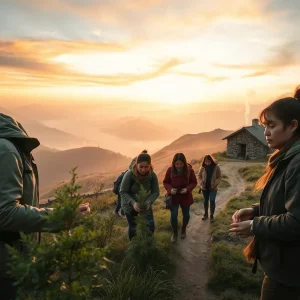
The first light of dawn spills over the emerald ridges of Bali, painting the mist-laden valleys in hues of gold and jade. Somewhere beyond the well-trodden paths of Ubud and the sun-kissed shores of Seminyak, a different kind of magic unfolds—one that pulses with the quiet rhythm of the earth. Here, where the air hums with the songs of unseen birds and the scent of frangipani lingers like a whispered promise, a new era of travel is being born. It is not just about seeing; it is about feeling. Not just about visiting, but belonging. This is the realm of regenerative travel, where every step leaves the land richer, every stay restores the soul, and every journey becomes a love letter to the planet.
The Alchemy of Water and Stone
Deep within Bali’s lush interior, where the jungle clings to ancient volcanic slopes, hidden waterfalls cascade into emerald pools that have cradled secrets for centuries. These are not the crowded, Instagram-famed falls of Tegenungan or Sekumpul, but the quiet guardians of the island’s untouched heart—places like Nungnung’s veil of mist or the secluded Banyu Wana Amertha, where the water tumbles in a symphony of silver threads. To stand beneath their cool embrace is to be baptized in nature’s own cathedral, where the roar of the falls drowns out the noise of the modern world and the spray carries the breath of the earth itself.
But these sanctuaries are more than just postcard-perfect scenes. They are the cornerstones of a movement that seeks to protect, not just preserve. Local guides, often descendants of the land they steward, lead small groups along trails lined with medicinal plants and sacred offerings. They speak of the Tri Hita Karana, Bali’s ancient philosophy of harmony between humans, nature, and the divine. Here, tourism is not an extractive force but a regenerative one—where every visitor becomes a guardian, every dollar a seed planted for the future.
The Rise of the Green Sanctuary
Nestled among these waterfall-laced valleys, a new kind of retreat is emerging—one that marries the raw beauty of the natural world with the innovation of sustainable design. These are not the sterile, energy-guzzling resorts of old, but living, breathing sanctuaries that draw their power from the sun, their water from the rain, and their inspiration from the land. Welcome to the era of green building havens, where every beam, every tile, every whisper of wind through bamboo is a testament to human ingenuity in harmony with nature.
Take, for instance, the Bamboo Indah in Ubud, a masterpiece of regenerative architecture where towering bamboo structures rise like organic sculptures from the jungle floor. Designed by visionary architect Elora Hardy, these homes are not just built on the land but with it. Bamboo, a grass that grows at astonishing speeds, is harvested sustainably, sequestering carbon as it matures. The roofs are thatched with alang-alang grass, a traditional material that insulates naturally, while solar panels glint subtly among the foliage, powering the retreat without a whisper of fossil fuels. Even the pools are chemical-free, purified by plants in a closed-loop system that mimics nature’s own filtration.
Where the Wild Meets the Wise
But regenerative travel is not just about the places we stay; it is about the way we stay. It is the difference between a transaction and a transformation. In Bali, this philosophy is embodied in the growing number of heritage homestays and cultural immersion retreats, where travelers are invited not just to observe but to participate. To learn the art of canang sari offerings from a Balinese grandmother, to grind spices for a traditional bebek betutu feast, or to join a village in a melukat purification ritual at dawn. These are not performances for tourists but sacred acts of connection, where the line between guest and host blurs into something deeper—a shared humanity.
At the heart of this movement is the belief that travel should give back as much as it takes. In the village of Penglipuran, one of Bali’s last remaining traditional settlements, homestays are run by families who reinvest their earnings into community projects—restoring ancient temples, replanting native forests, or funding education for local children. Here, the currency of travel is not just money but respect. The more you give, the more you receive—not in material wealth, but in the quiet joy of knowing your presence has made the world a little kinder, a little greener.
The Digital Nomad’s Regenerative Oasis
For the modern wanderer, Bali has long been a beacon—a place where the Wi-Fi is strong but the pull of the wild is stronger. Yet even here, in the realm of laptops and lattes, a shift is underway. The digital nomad hubs of Canggu and Uluwatu are evolving, no longer just places to work remotely but regenerative workation sanctuaries where productivity and purpose intertwine. Imagine typing away on your laptop as the scent of lemongrass tea drifts from a nearby café, your workspace a sunlit terrace overlooking rice terraces that have fed generations. This is the new frontier of work: not just anywhere, but meaningfully.
Spaces like The Shala in Canggu are leading the charge, offering co-working spaces powered by renewable energy, zero-waste policies, and community events that foster connection—not just between humans, but between humans and the land. Here, the digital nomad is no longer a transient visitor but a steward, planting trees to offset their carbon footprint, volunteering with local conservation projects, or simply choosing to support businesses that prioritize people and planet over profit. The message is clear: in Bali, even the way we work can be a force for regeneration.
The Whisper of What’s Next
As the sun dips below the horizon, casting long shadows over Bali’s sacred landscapes, the air grows thick with possibility. The waterfalls continue their eternal song, the bamboo groves sway in the evening breeze, and somewhere, a family lights a lamp in a heritage homestay, welcoming a stranger as kin. This is the promise of regenerative travel—not a fleeting trend, but a return. A return to the understanding that we are not separate from the earth, but a part of it. That every journey is an opportunity to heal, to connect, to leave a place better than we found it.
Bali is not just a destination; it is a living, breathing testament to what happens when we choose to travel with intention. When we listen to the whisper of the waterfalls, the rustle of the bamboo, the stories of the people who call this island home. It is an invitation to step off the beaten path and into the heart of what it means to wander—not just with our feet, but with our souls. And perhaps, in doing so, we might just find that the greatest adventure of all is the one that leaves us, and the world, forever changed.