The Pulse of Paradise: How Uluwatu’s Surf Camps and Jungle Sanctuaries Are Crafting the Future of Mindful Travel
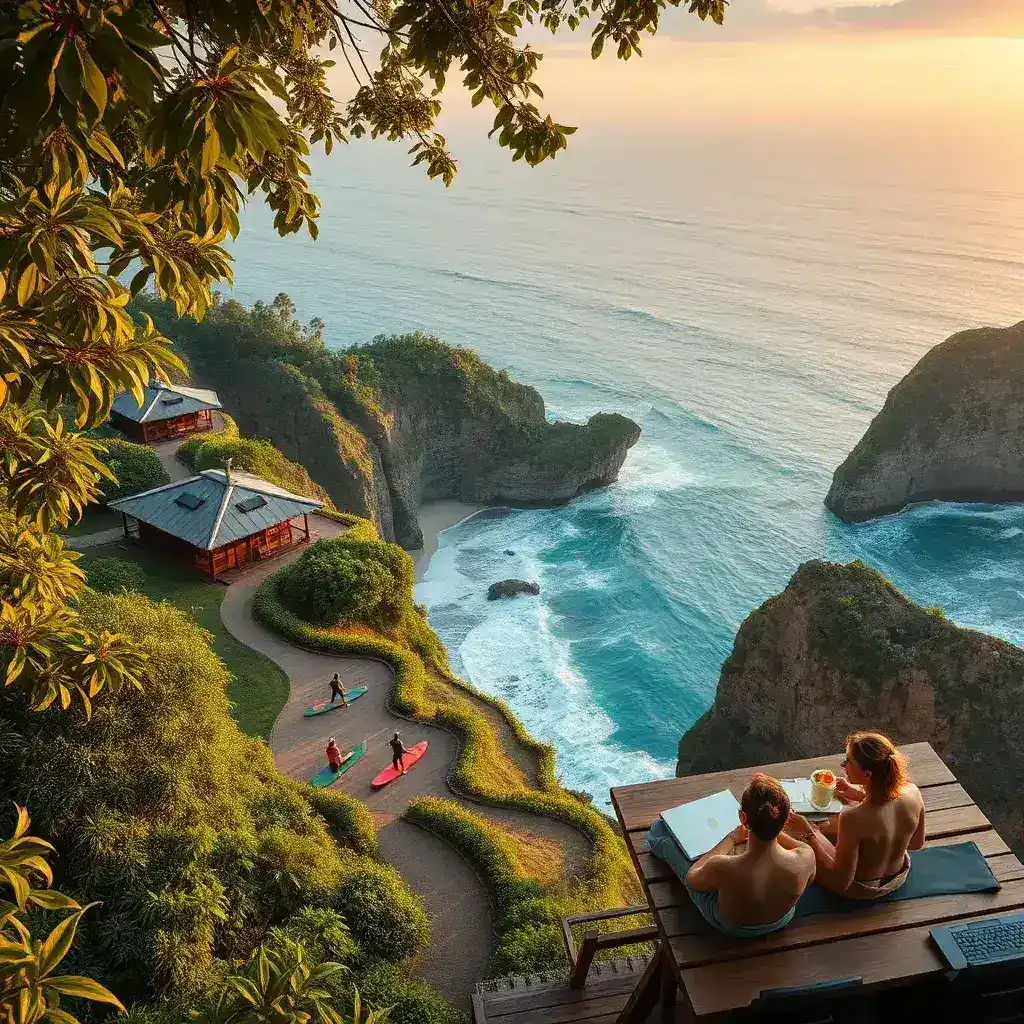
The ocean breathes in deep, rhythmic swells, its salt-kissed whispers curling around the cliffs of Uluwatu like an ancient lullaby. Here, where the Indian Ocean crashes against limestone in a symphony of foam and fury, a new kind of traveler is emerging—one who seeks not just the thrill of the ride, but the rhythm of the earth itself. This is the heart of Bali’s regenerative renaissance, where surf camps and jungle sanctuaries are no longer just places to stay, but living, breathing ecosystems that nourish the soul and restore the land.
The Surf as a Sacred Ritual
Dawn breaks over the Bukit Peninsula in hues of molten gold, painting the sky with the promise of another day in paradise. For those who flock to Uluwatu’s surf camps, the first light isn’t just a signal to wax their boards—it’s an invitation to step into a ritual older than time. The best of these camps, like the legendary Single Fin or the eco-conscious Uluwatu Surf Villas, have redefined what it means to chase waves. No longer are they mere pit stops for adrenaline junkies; they are sanctuaries where surfing becomes a meditation, a dance with the ocean’s raw power.
Take, for instance, the way these camps blend seamlessly into the landscape. Solar panels glint on rooftops like scales on a dragon, while rainwater harvesting systems whisper of a future where every drop is cherished. The bungalows, crafted from reclaimed teak and bamboo, stand as testaments to Bali’s age-old wisdom—build with nature, not against it. And then there’s the food: farm-to-table feasts where the catch of the day is paired with organic greens grown in on-site permaculture gardens. Here, every meal is a celebration of the land’s generosity, a reminder that sustainability isn’t a trend but a way of life.
Where the Jungle Whispers Back
But the magic of Uluwatu isn’t confined to its shores. Venture inland, where the jungle hums with the songs of cicadas and the distant chatter of monkeys, and you’ll find another layer of this regenerative tapestry: jungle yoga retreats that double as conservation hubs. Places like The Yoga Barn Uluwatu or Jungle Fish are more than just studios with a view—they are living classrooms where travelers learn to move not just their bodies, but their consciousness.
Imagine starting your day with a sunrise vinyasa flow, the air thick with the scent of frangipani and damp earth. As you stretch into downward dog, the jungle breathes with you, its canopy a cathedral of green. Later, you might join a workshop on regenerative agriculture, learning how to turn kitchen scraps into compost or how to plant native species that heal the soil. These retreats don’t just offer escape; they offer transformation, turning visitors into stewards of the land they’ve come to love.
The Alchemy of Community and Conservation
What sets these experiences apart is their deep-rooted connection to the local community. In Uluwatu, the line between traveler and local blurs, creating a symbiotic relationship where both parties give and receive in equal measure. Take the Bali Life Foundation, which partners with surf camps to offer surf therapy for underprivileged children. Or the Bye Bye Plastic Bags initiative, born from the passion of two young Balinese sisters, which has turned Uluwatu into a plastic-free zone. These aren’t just side projects; they are the beating heart of a movement that understands tourism’s true potential: to heal, not harm.
Even the architecture tells a story of collaboration. Many of the surf camps and retreats are designed by local artisans, their structures a fusion of traditional Balinese techniques and modern eco-innovations. The result? Spaces that feel both timeless and cutting-edge, where every beam and thatch roof is a nod to the island’s heritage. It’s a reminder that sustainability isn’t about sacrificing beauty or comfort—it’s about redefining them.
The Workation Revolution
For the digital nomads who’ve made Bali their home away from home, Uluwatu offers the perfect blend of productivity and paradise. Co-working spaces like Dojo Bali or The Onion Collective have sprouted up near the surf breaks, where the sound of crashing waves doubles as a white-noise machine for focused work. Here, the 9-to-5 grind is replaced by a more fluid rhythm: a morning surf session, a few hours of deep work, and an afternoon spent volunteering at a local organic farm or teaching English to village children.
This is the future of work—one where purpose and pleasure aren’t mutually exclusive but intertwined. The tropical workation isn’t just about escaping the office; it’s about reimagining what work can be when it’s rooted in community and connection. And in Uluwatu, where the Wi-Fi is strong but the distractions are even stronger (think: cliffside sunsets and hidden waterfall hikes), it’s easy to see why so many are choosing to stay.
The Ripple Effect of Mindful Travel
The beauty of Uluwatu’s regenerative model is that it doesn’t just benefit the traveler—it ripples outward, touching every corner of the ecosystem. When a surf camp installs a wastewater treatment system, it’s not just about keeping the beaches clean; it’s about protecting the coral reefs that teem with life just offshore. When a yoga retreat plants a thousand mangroves, it’s not just about offsetting carbon; it’s about restoring the natural barriers that shield the coast from erosion.
And then there’s the cultural preservation. By supporting heritage homestays and local guides, travelers become custodians of Bali’s rich traditions. They learn the stories behind the island’s sacred dances, the significance of its intricate offerings, and the wisdom of its healers. In doing so, they ensure that these traditions don’t fade into the past but evolve into the future, carried forward by a new generation of mindful explorers.
As the sun dips below the horizon, painting the sky in shades of tangerine and violet, the cliffs of Uluwatu glow with a quiet intensity. This is more than just a destination; it’s a living testament to what happens when travel transcends the transactional. Here, every wave ridden, every yoga pose held, and every seed planted is a step toward a future where paradise isn’t just visited—it’s nurtured. And in that nurturing, we find not just the pulse of the earth, but the rhythm of our own awakening.