The Symphony of Salt and Stone: Where Rock Climbing Meets the Whispering Waves of Coastal Exploration
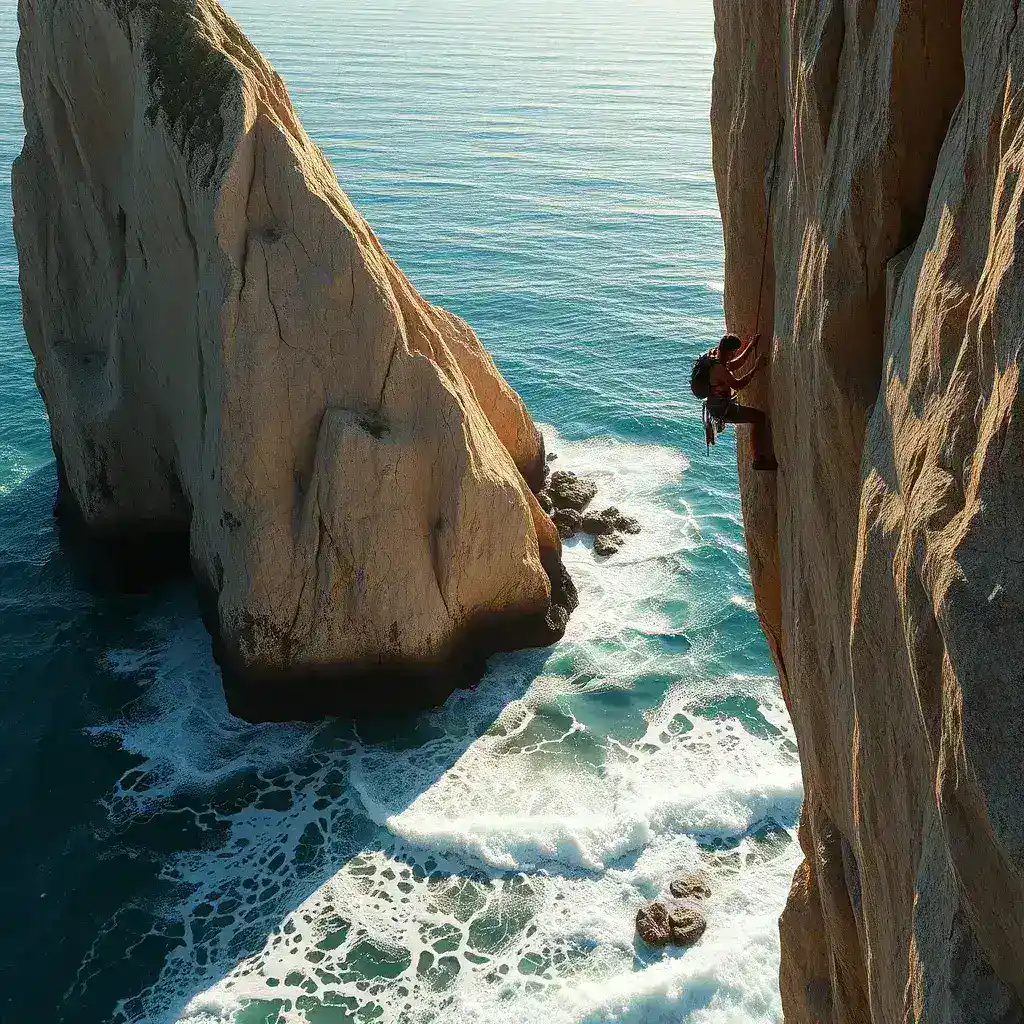
The first time I pressed my palms against the sun-warmed granite of a sea cliff, the ocean’s breath rose to meet me—a salty, rhythmic exhale that seemed to sync with the pulse in my fingertips. There, suspended between the solid certainty of stone and the fluid mystery of the sea, I understood: adventure isn’t just about conquering heights or depths. It’s about listening to the conversation between them.
The Alchemy of Contrasts
Coastal rock climbing is where two worlds collide in a dance of raw, untamed beauty. The cliffs, carved by millennia of wind and wave, stand as ancient sentinels, their surfaces etched with the stories of tides long past. Below, the ocean surges and retreats, a living force that both nurtures and erodes, giving and taking in the same relentless motion. To climb here is to become part of that dialogue—to feel the rock’s resilience beneath your hands even as the sea’s whispers rise to meet you.
I remember my first climb along the jagged coast of Mallorca, where the Tramuntana Mountains plunge dramatically into the Mediterranean. The limestone cliffs, bleached by the sun and sculpted by the salt, offered a playground of crimps, pockets, and overhangs. Each move demanded focus, but the real magic lay in the moments between—when I paused to catch my breath and turned my gaze toward the horizon. The sea stretched endlessly, its surface shimmering like liquid silver, and for a heartbeat, I forgot I was climbing. I was simply there, suspended in the space where earth and water meet.
The Call of the Tides
What sets coastal climbing apart is the ocean’s ever-changing mood. The tides dictate the rhythm of the climb, turning routes from accessible to treacherous in a matter of hours. A ledge that was dry and welcoming at dawn might be swallowed by the sea by midday, forcing climbers to time their ascents with the precision of a sailor reading the stars. There’s an intimacy in this dance with the tides, a reminder that nature, not the climber, sets the rules.
In Thailand’s Railay Beach, where towering limestone karsts rise like skyscrapers from the turquoise waters, I learned this lesson firsthand. The cliffs are a labyrinth of caves and overhangs, their surfaces slick with humidity and the occasional spray of saltwater. One morning, I set out to tackle a route called The Humanality, a challenging 5.12a that winds its way up a sheer face. Halfway up, the tide began to rise, and the waves below grew louder, more insistent. My belayer, a local climber named Nok, called up to me, her voice barely audible over the roar of the surf. “Move faster,” she urged, “or you’ll be swimming before you reach the top.” I pushed harder, my muscles burning, but the ocean’s pull was undeniable. When I finally hauled myself over the lip of the cliff, I collapsed onto the warm rock, laughing as the sea spray misted my face. It was a humbling reminder that the ocean doesn’t care about your strength or skill—it only asks that you respect its power.
The Fragile Beauty of Coastal Ecosystems
Coastal climbing isn’t just about the thrill of the ascent; it’s also an invitation to witness the delicate balance of life that thrives where land and sea intertwine. The cliffs are home to seabirds, nesting in crevices and ledges, their cries echoing against the rock. Below, the tide pools teem with life—anemones, starfish, and crabs, each playing their part in the intricate web of the intertidal zone. To climb here is to become a temporary guest in this vibrant ecosystem, and with that privilege comes responsibility.
In California’s Big Sur, where the Santa Lucia Mountains meet the Pacific in a dramatic collision of cliffs and waves, I’ve seen climbers pause mid-route to watch a pod of dolphins glide through the water below or a sea otter float on its back, cracking open a mussel with a rock. These moments are a reminder that adventure and conservation are not mutually exclusive. The best climbers—like the best explorers—are those who leave no trace, who tread lightly and respect the wild places they love. After all, the cliffs and the sea have been here long before us, and they’ll remain long after we’re gone. Our role is not to conquer them but to protect them, to ensure that future generations can experience the same awe we feel when we stand at the edge of the world.
The Soul of the Climb
There’s a unique kind of magic in coastal climbing, a blend of adrenaline and serenity that’s hard to find anywhere else. The sound of the waves crashing against the base of the cliff becomes a metronome, guiding your movements as you ascend. The salt in the air stings your skin, a reminder that you’re alive, that you’re part of something bigger than yourself. And when you reach the top, the view is always worth the effort—the endless expanse of the ocean, the horizon stretching out like a promise, the wind carrying the scent of salt and adventure.
But the real reward isn’t the summit. It’s the moments in between—the way the light catches the water at dawn, turning it into a canvas of gold and blue; the way the rock feels warm and alive beneath your hands; the way the sea’s song lingers in your ears long after you’ve left the cliff behind. These are the moments that stay with you, that shape you, that remind you why you climb in the first place. Because in the end, it’s not about how high you go or how hard you push. It’s about the connection you forge with the wild, untamed heart of the world—and the way it changes you, one climb at a time.
So the next time you find yourself standing at the base of a sea cliff, take a moment to listen. The ocean is whispering, the rock is waiting, and the adventure is calling. All you have to do is answer.