The Last Ascent: How Alpine Climbing and Marine Sanctuaries Reveal the Fragile Heart of Adventure
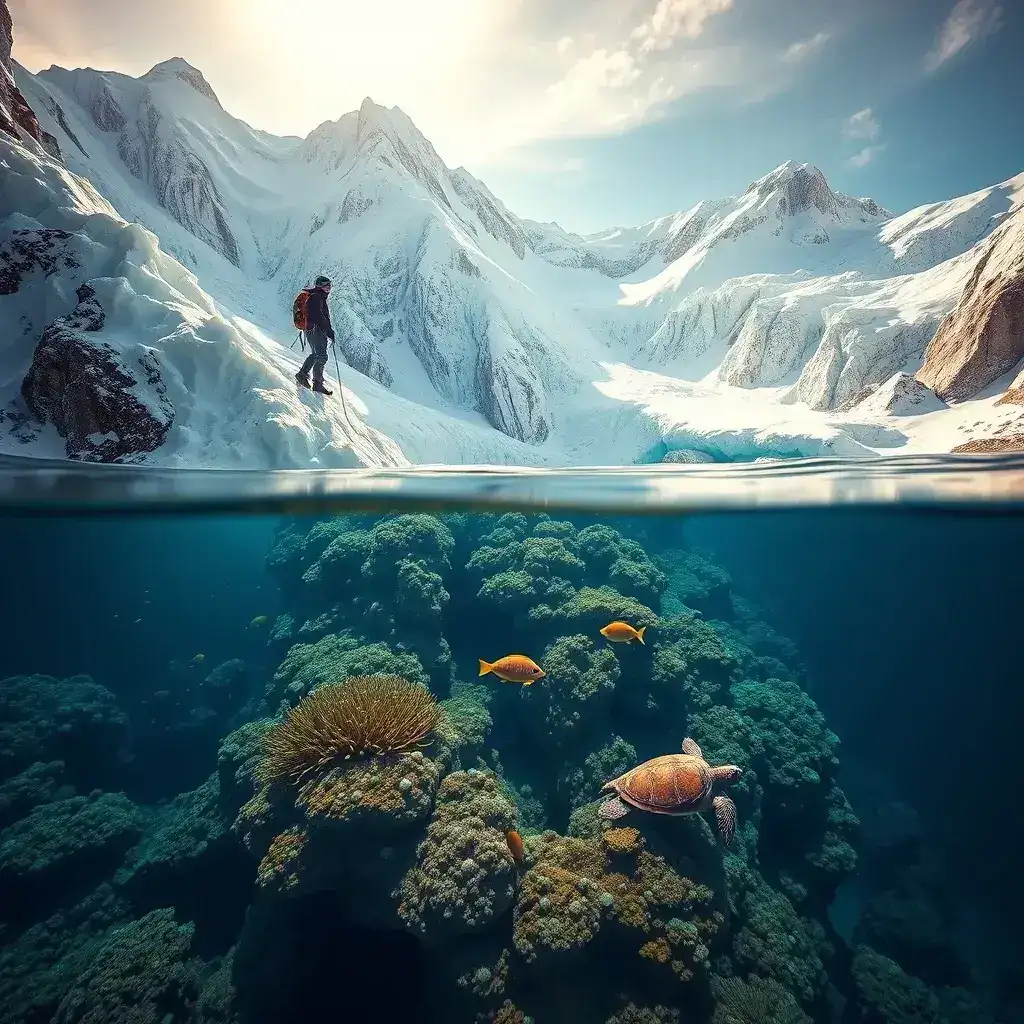
The first time I stood on the edge of a glacier, the world below me seemed to hold its breath. The air was thin, sharp with the scent of ice and ancient stone, and the silence was so profound it hummed in my bones. Alpine climbing isn’t just a sport—it’s a conversation with the Earth’s most raw and unyielding forces. Every step upward is a negotiation, a delicate balance between human ambition and the mountain’s indifferent majesty. The crampons bite into the ice, the rope tightens with the weight of trust, and the wind howls like a reminder that we are merely guests in this frozen cathedral.
The Alchemy of Altitude and Stillness
There’s a moment, just before dawn, when the alpine world feels suspended between night and day. The stars still cling to the sky, but the horizon glows with the promise of light. It’s in these quiet hours that the true magic of high-altitude climbing reveals itself. The body aches, the lungs burn, but the mind sharpens, honed by the thin air and the sheer will to keep moving. The mountain doesn’t care about your fatigue or your fears—it only responds to respect, to the humility of knowing you are small in the face of something vast and eternal.
And yet, for all its harshness, the alpine world is also a place of profound beauty. The way the sunlight fractures through ice formations, turning them into prisms of blue and gold. The way the snow muffles sound, creating a silence so deep it feels like a physical presence. The way the stars at night seem close enough to touch, as if the sky has leaned down just to whisper its secrets. These are the moments that linger long after the descent, the memories that pull you back to the mountains again and again.
The Ocean’s Mirror: Where Depths Reflect the Heights
If the mountains are the Earth’s spine, then the ocean is its beating heart—a vast, mysterious expanse that holds as many secrets as the peaks do. Marine sanctuaries, those rare and precious pockets of the sea where life thrives untouched by human greed, are the underwater equivalent of alpine summits. To dive into their depths is to enter another world, one where time moves differently, where the rules of gravity and light bend and twist in mesmerizing ways.
I remember the first time I descended into a coral reef sanctuary. The water was so clear it felt like flying, and the reef itself was a riot of color and movement. Fish darted between the corals like living jewels, their scales flashing silver and sapphire in the dappled sunlight. A sea turtle glided past, its ancient eyes meeting mine for a fleeting moment, and I felt a connection so deep it stole my breath. This was a world untouched by the chaos of the surface, a place where life existed in perfect, fragile balance.
The Fragile Thread Between Two Worlds
What strikes me most about both alpine climbing and marine conservation is their fragility. The glaciers are melting, the ice thinning, the peaks that once seemed eternal now showing the scars of a warming world. The coral reefs, too, are under siege—bleached by rising temperatures, choked by pollution, their vibrant ecosystems fading like a dream upon waking. And yet, in their vulnerability, they reveal something profound about the human spirit. We are drawn to these wild places not just for the thrill of conquest, but for the chance to witness something pure, something real.
Adventure, at its core, is about more than adrenaline. It’s about connection—to the Earth, to each other, to the parts of ourselves that we often ignore in the rush of daily life. When we stand on a summit or dive into the blue, we are reminded of our place in the world. We are small, yes, but we are also part of something vast and beautiful. And that knowledge, that fleeting sense of belonging, is what keeps us coming back.
The Unseen Guardians of the Wild
There are those who dedicate their lives to protecting these wild places, the unsung heroes of conservation who work tirelessly to ensure that the mountains and the oceans remain havens for future generations. They are the scientists who study the melting glaciers, the activists who fight to establish marine sanctuaries, the guides who teach climbers and divers how to tread lightly on the Earth. Their work is often thankless, their battles uphill, but their passion is a flame that refuses to be extinguished.
One such guardian once told me, “The wild doesn’t need us. But we need the wild.” It’s a simple truth, but one that cuts to the heart of why adventure matters. The mountains and the oceans don’t exist for our entertainment or our Instagram feeds. They exist as a reminder of what the world was like before we shaped it to our will, and what it could be again if we choose to protect it.
So the next time you find yourself standing on a summit or floating above a coral reef, take a moment to listen. Not just to the wind or the waves, but to the deeper call—the one that asks you to remember, to respect, and to return. Because these places are not just destinations. They are the last bastions of a world that is slipping away, and it is up to us to ensure they endure.
The ice will continue to crack under the weight of time, the corals will sway in the currents, and the mountains will stand tall, indifferent to our fleeting presence. But if we listen closely, we might just hear their silent plea: Stay. Fight. Remember. And perhaps, in that moment, we’ll find the courage to answer.