The Silent Pulse of the Earth: How Off-Grid Camping and Volcanic Hiking Are Redefining Regenerative Adventure
The first light of dawn spills over the horizon, painting the sky in hues of amber and rose, as the world stirs awake. There’s a quiet magic in these moments—when the air is crisp, the earth hums beneath your feet, and the only sounds are the whisper of the wind and the distant call of a bird. This is the essence of regenerative adventure: a journey that doesn’t just take from the land but gives back, leaving it richer, wilder, and more alive than before. And nowhere is this alchemy more palpable than in the raw, untamed beauty of off-grid camping and volcanic hiking.
The Call of the Wild: Off-Grid Camping as a Portal to Regeneration
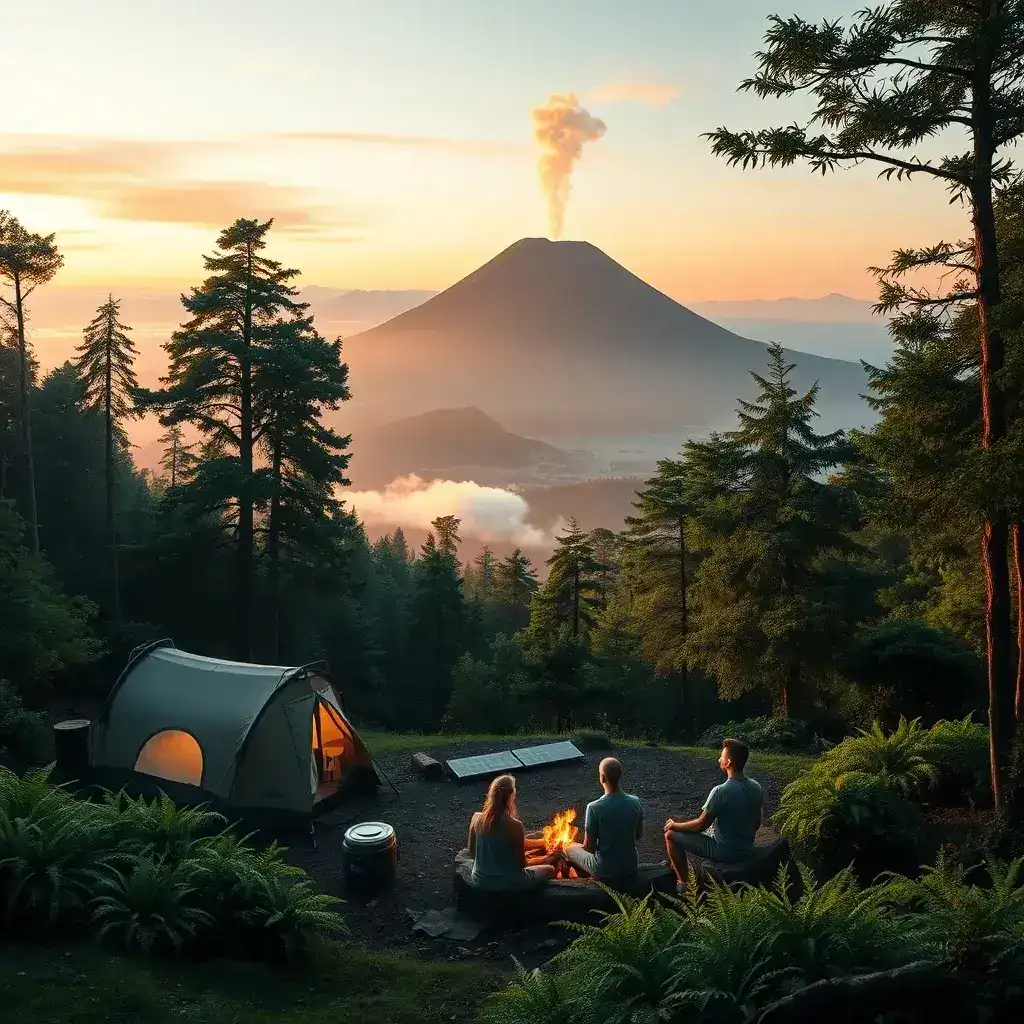
Off-grid camping is more than just a escape from the noise of modern life—it’s a return to the primal rhythm of existence. Far from the hum of generators and the glow of city lights, these sanctuaries of solitude offer a rare opportunity to disconnect from the digital world and reconnect with the earth. Picture this: a secluded clearing nestled in the heart of a dense forest, where the only light comes from the stars above and the only soundtrack is the symphony of crickets and rustling leaves. Here, every breath feels deeper, every step more intentional.
But regenerative off-grid camping goes beyond mere disconnection. It’s about treading lightly, leaving no trace, and even restoring the land. Campsites designed with sustainability in mind use solar power, composting toilets, and rainwater harvesting systems, ensuring that the footprint left behind is minimal. Some go further, integrating permaculture gardens or native plant restoration projects, turning the act of camping into a force for ecological renewal. It’s a radical act of love—for the planet, for the self, and for the future.
The Sacred Fire: Volcanic Hiking and the Alchemy of Transformation
If off-grid camping is the quiet heartbeat of regenerative travel, then volcanic hiking is its fiery soul. There’s something almost mythical about standing on the edge of a volcano, gazing into the belly of the earth where molten rock once surged. These landscapes are not just geological wonders; they are living, breathing entities that demand reverence. The act of hiking a volcano is a pilgrimage—a journey into the heart of the planet’s raw power and resilience.
Take, for example, the volcanic trails of Bali’s Mount Batur or the dramatic slopes of Java’s Mount Merapi. These hikes are not just physical challenges; they are spiritual odysseys. The ascent is steep, the air thin, and the terrain unforgiving, but the reward is nothing short of transcendent. At the summit, as the sun rises over a sea of clouds, there’s a profound sense of connection—to the earth, to the cosmos, and to something greater than oneself. It’s a reminder that we are not separate from nature but a part of it, woven into the fabric of the universe.
Regenerative volcanic hiking takes this connection a step further. Guides and tour operators are increasingly adopting practices that protect these fragile ecosystems, from limiting group sizes to educating hikers about the cultural and ecological significance of the land. Some even partner with local communities to fund conservation efforts or support traditional land stewardship practices. The result? A journey that not only transforms the traveler but also honors and preserves the land for generations to come.
Where Silence Speaks: The Intersection of Off-Grid Camping and Volcanic Trails
Imagine a journey that begins in the quiet solitude of an off-grid campsite and culminates in the fiery embrace of a volcanic summit. This is the essence of regenerative adventure—a seamless blend of stillness and intensity, of solitude and connection. The transition from the hushed serenity of the forest to the dramatic grandeur of a volcanic landscape is a metaphor for the regenerative traveler’s path: a journey of inner and outer transformation.
In these spaces, time slows down. The urgency of modern life fades, replaced by a deep, abiding presence. You learn to listen—not just with your ears, but with your whole being. The rustle of leaves becomes a conversation, the crackle of a campfire a story, the rumble of a distant volcano a call to adventure. This is travel stripped of its superficial layers, reduced to its purest form: a dialogue between the traveler and the earth.
The Ripple Effect: How Regenerative Adventure Inspires Change
The beauty of regenerative adventure lies in its ripple effect. When you camp off-grid, you’re not just reducing your carbon footprint; you’re also supporting local economies, preserving wild spaces, and inspiring others to do the same. When you hike a volcano with reverence, you’re not just ticking off a bucket-list item; you’re fostering a deeper appreciation for the planet’s wonders and the need to protect them. These experiences don’t just change the way you travel—they change the way you live.
And perhaps that’s the greatest gift of regenerative adventure: the realization that every choice matters. Whether it’s choosing a campsite that prioritizes sustainability, opting for a tour operator that gives back to the community, or simply taking the time to sit in silence and listen to the earth, these small acts add up. They weave a tapestry of care, of respect, of love for the planet and all its inhabitants. In a world that often feels fractured and fast-paced, regenerative adventure offers a path back to wholeness—a way to heal not just the land, but ourselves.
The earth has always been our greatest teacher, whispering its wisdom through the rustle of leaves, the crash of waves, and the rumble of volcanoes. Off-grid camping and volcanic hiking are not just ways to explore the world; they are invitations to remember our place within it. To walk lightly, to listen deeply, and to leave the land more vibrant than we found it. In these moments of quiet connection and fiery transformation, we find not just adventure, but a deeper sense of purpose—a reminder that we are all part of something far greater than ourselves.