The Regenerative Thread: How Bali’s Jungle Yoga Retreats and Sustainable Smart Homes Are Stitching a Future of Mindful Abundance
The jungle breathes in slow, rhythmic waves, its emerald canopy swaying like the chest of some ancient, slumbering giant. Here, where the air hums with the whispers of frangipani and the distant chatter of macaques, a quiet revolution is unfolding—one that marries the raw, untamed spirit of nature with the precision of human ingenuity. Bali, a land where spirituality and sustainability intertwine like vines around a sacred banyan, has become the epicenter of a movement that is redefining what it means to travel, to live, and to thrive. This is the story of how jungle yoga retreats and sustainable smart homes are weaving a tapestry of regenerative abundance, stitch by stitch, breath by breath.
The Alchemy of Stillness: Jungle Yoga Retreats as Sanctuaries of the Soul
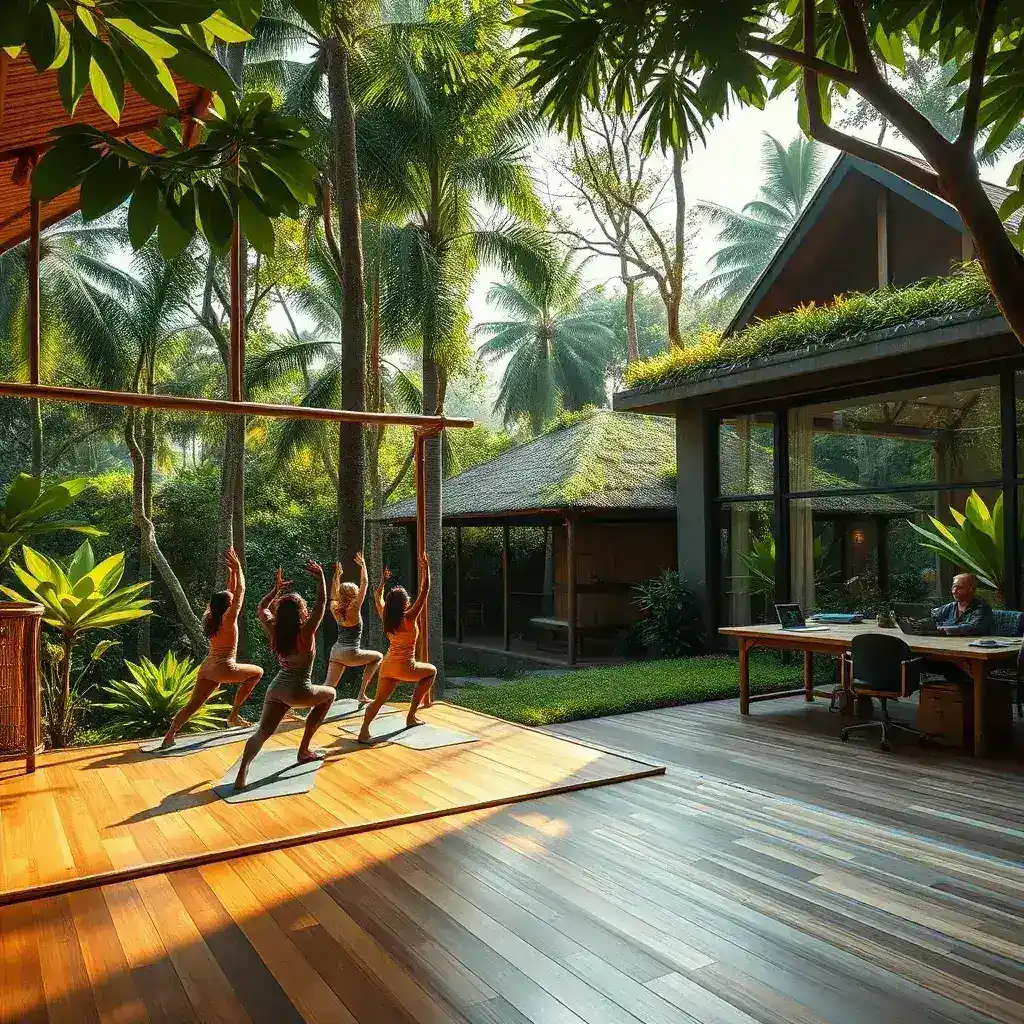
Deep in the heart of Ubud’s emerald embrace, where the morning mist clings to the rice terraces like a lover’s sigh, jungle yoga retreats are rising as modern-day ashrams for the weary and the wise. These are not the sterile, air-conditioned studios of the West, where the hum of fluorescent lights drowns out the song of the soul. No, these are open-air pavilions, their bamboo floors worn smooth by the bare feet of seekers from every corner of the globe. The walls—if they exist at all—are woven from rattan and reeds, allowing the jungle’s breath to mingle with the breath of those who practice here.
At dawn, the world awakens in a symphony of light and sound. The first rays of the sun pierce the canopy, casting golden spears across the yoga shala, while the air fills with the calls of birds and the rustle of leaves. Here, yoga is not merely a physical practice but a communion with the earth. The poses—downward dog, tree, warrior—become acts of devotion, each movement a prayer to the land that cradles them. Teachers speak of *prana*, the life force that flows through all things, and how the jungle itself is a living, breathing embodiment of this energy. To practice here is to remember what it means to be alive, to feel the pulse of the planet in your veins.
But these retreats are more than just sanctuaries for the spirit; they are beacons of sustainability. Many are built using traditional Balinese architecture, with thatched roofs and walls of bamboo, materials that are not only renewable but also biodegradable. Solar panels glint on the rooftops, harnessing the power of the tropical sun, while rainwater harvesting systems ensure that every drop is cherished. Composting toilets and organic gardens close the loop, turning waste into nourishment and nourishment into life. Here, the mantra is not just *om*—it is *zero waste*.
The Green Blueprint: Sustainable Smart Homes as Temples of Modern Living
Yet the regenerative thread does not end in the jungle. It winds its way through the rice fields and down to the coast, where a new kind of dwelling is taking shape—one that harmonizes cutting-edge technology with the timeless wisdom of the earth. Sustainable smart homes in Bali are not just houses; they are living organisms, designed to exist in symbiosis with their environment. These are the temples of modern living, where luxury and sustainability are not opposing forces but two sides of the same golden coin.
Imagine waking up in a home that breathes with you. The walls, made from rammed earth and reclaimed teak, regulate the temperature naturally, keeping the interior cool in the heat of the day and warm when the evening breeze rolls in. The roof is a lush garden, a living tapestry of succulents and ferns that insulates the home while providing a habitat for butterflies and bees. Solar panels, sleek and unobtrusive, soak up the sun’s energy, powering everything from the LED lights to the high-efficiency appliances. Even the water you drink is a gift from the sky, filtered and stored in underground cisterns before being purified for use.
But the true magic of these homes lies in their intelligence. Smart systems monitor energy usage in real-time, adjusting lighting, cooling, and water flow to minimize waste. Sensors detect when a room is empty and automatically dim the lights, while rainwater harvesting systems kick into gear at the first drop of a tropical shower. These homes are not just sustainable; they are regenerative, giving back to the earth more than they take. They are a testament to what happens when human ingenuity bows to the wisdom of nature.
The Digital Nomad’s Regenerative Haven
For the growing tribe of digital nomads who flock to Bali, these sustainable smart homes offer more than just a place to rest their laptops—they provide a way of life. Picture this: you wake up to the sound of birdsong, the air already warm with the promise of the day. You pad barefoot across the polished concrete floors to your workspace, a sunlit nook with a view of the rice fields stretching into the distance. Your coffee is brewed from beans grown in the garden, the milk a creamy almond blend made from nuts harvested just steps away. As you open your laptop, the Wi-Fi connects seamlessly, powered by the same solar panels that light your home.
This is the new paradigm of work and life, where productivity and sustainability dance in perfect harmony. Digital nomads are no longer just visitors; they are stewards of the land, their presence a force for regeneration rather than extraction. Co-working spaces built from bamboo and recycled materials dot the landscape, offering not just desks and Wi-Fi but a sense of community. Here, collaboration is not just about business; it is about co-creating a future where technology and nature thrive side by side.
The Ripple Effect: How Regenerative Living is Transforming Bali
The impact of these jungle yoga retreats and sustainable smart homes extends far beyond their bamboo walls and solar-paneled roofs. They are catalysts for change, inspiring a ripple effect that is transforming Bali into a living laboratory of regenerative living. Local communities are embracing sustainable practices, from permaculture farming to zero-waste initiatives, while travelers are leaving with more than just memories—they are carrying the seeds of a new way of being.
Take, for example, the story of a small village near Ubud, where a group of women have turned their love of weaving into a sustainable business. Using natural dyes made from turmeric, indigo, and mangosteen, they create textiles that are as vibrant as they are eco-friendly. Their workshop, powered by solar energy and built from reclaimed wood, is a testament to what happens when tradition and innovation collide. Tourists who visit the village leave with more than just a beautiful scarf; they leave with a story, a connection to the land and the people who call it home.
Or consider the coastal communities of Canggu and Uluwatu, where surf camps and eco-resorts are leading the charge in marine conservation. Coral restoration projects, beach clean-ups, and educational programs are turning surfers into stewards of the sea. Here, the ocean is not just a playground; it is a sacred trust, a living entity that demands respect and care. The surf camps, built from bamboo and powered by renewable energy, are more than just places to catch waves—they are sanctuaries for the soul, where the rhythm of the tides becomes a meditation and the act of riding a wave a prayer to the sea.
The Thread That Binds: A Vision of Mindful Abundance
In Bali, the line between the sacred and the sustainable has always been blurred. Here, the earth is not a resource to be exploited but a living, breathing entity to be honored. The jungle yoga retreats and sustainable smart homes that are sprouting across the island are not just buildings or businesses; they are manifestations of a deeper truth—that abundance and sustainability are not mutually exclusive but two sides of the same coin. To live regeneratively is to live abundantly, to recognize that the earth’s gifts are not infinite but infinite in their capacity to renew, if only we treat them with care.
As the sun dips below the horizon, casting the rice fields in hues of gold and amber, the air fills with the scent of frangipani and the distant sound of gamelan music. In a bamboo pavilion, a group of yogis bow their heads in gratitude, their bodies still humming with the energy of the practice. Nearby, in a smart home nestled among the trees, a digital nomad closes her laptop, her workday done, her soul nourished by the land that surrounds her. These moments, these small acts of connection, are the threads that are weaving a new future—one where travel is not about escape but about return, where luxury is not about excess but about harmony, and where abundance is not about taking but about giving back. The jungle breathes, and so do we, in and out, in perfect rhythm with the earth.