The Breath of the Earth: How Peak Bagging and Deep Sea Diving Reveal the Planet’s Living Pulse
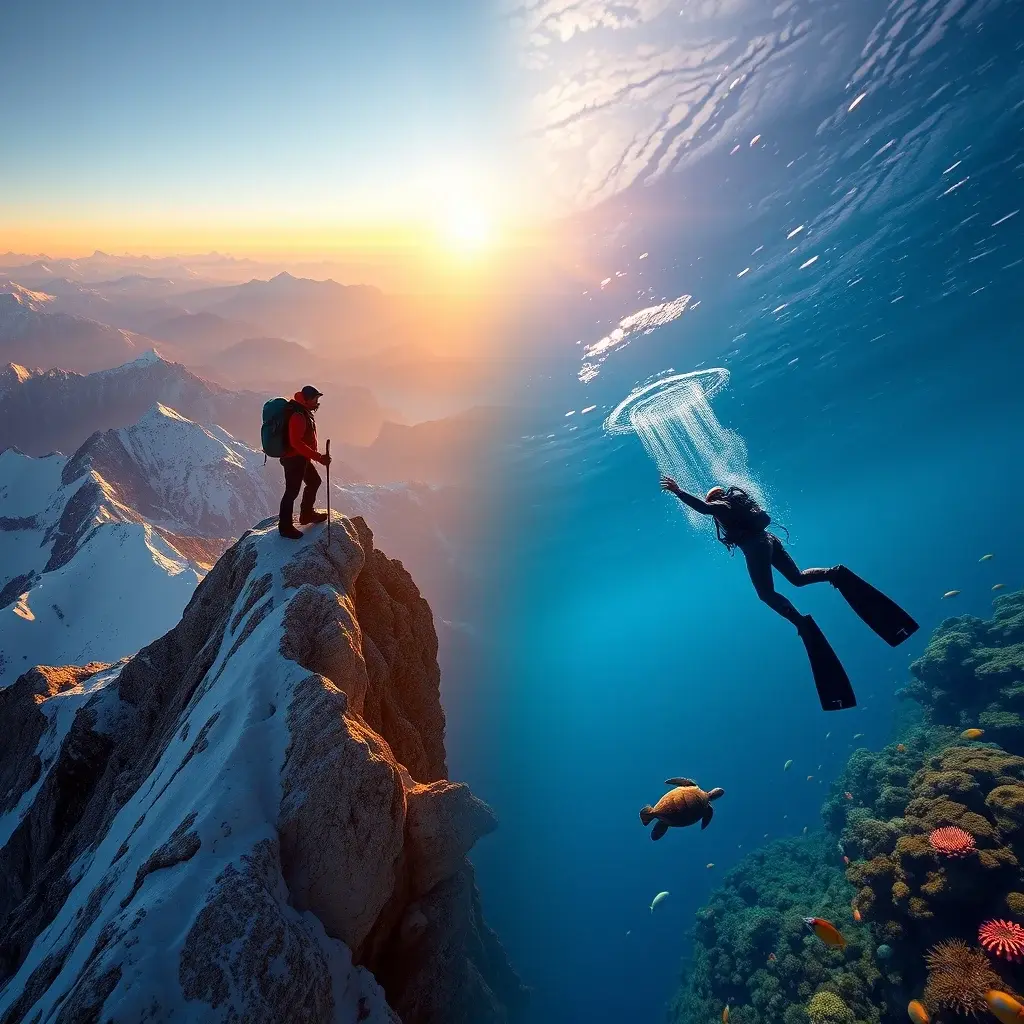
The first time I stood on the summit of a mountain, gasping not just from the thin air but from the sheer, overwhelming vastness of the world below, I understood why adventurers return to the heights again and again. There is something primal in the act of climbing—a conversation between human tenacity and the ancient, unyielding rock. Peak bagging is not merely a checklist of conquests; it is a pilgrimage to the places where the sky feels close enough to touch, where the wind carries whispers of the earth’s own heartbeat. Each step upward is a dialogue with the planet, a reminder that we are but fleeting visitors in a landscape that has stood for millennia.
The Alchemy of Ascent
There is a strange alchemy in the way altitude transforms the body and mind. The burn in your thighs as you navigate a scree field, the way your lungs expand to drink in the crisp, cold air, the moment your fingers brush the summit marker—these are not just physical sensations but sacred rites. The mountains demand respect, and in return, they offer clarity. The higher you climb, the more the noise of daily life fades, replaced by the raw, unfiltered symphony of nature: the crunch of ice beneath crampons, the distant call of a raven echoing off granite walls, the silence of a world untouched by human hands.
But peak bagging is more than the thrill of standing on top. It is about the journey—the early starts in the dark, the camaraderie of fellow climbers, the shared meals in base camp under a sky ablaze with stars. It is about the moments of doubt when the weather turns, when the path ahead is obscured by cloud, and you must trust in your skills, your gear, and the mountain itself. And it is about the descent, that bittersweet return to the world below, where the memories of the summit linger like the aftertaste of fine wine.
The Ocean’s Embrace: A World Beneath the Waves
If the mountains are the earth’s bones, then the ocean is its lifeblood. There is no experience quite like descending into the deep, where sunlight fractures into a thousand shimmering ribbons and the water wraps around you like a second skin. Deep sea diving is not just an adventure; it is a baptism. The first time you descend below the surface, the world above vanishes, and you are left in a realm of silence and weightlessness, where time moves differently and every movement feels like a dance.
The ocean is alive in ways that the land is not. Coral reefs pulse with color, a kaleidoscope of fish weaving through their labyrinthine structures. A sea turtle glides past, ancient and unhurried, while a school of barracuda darts like silver arrows through the blue. The deeper you go, the more the ocean reveals its secrets: shipwrecks encrusted with anemones, caves that hide bioluminescent creatures, the eerie, otherworldly beauty of the abyss. It is a world that humbles you, reminding you of how little we truly know about our own planet.
The Fragile Balance
Yet, for all its beauty, the ocean is also a place of fragility. Coral reefs, those vibrant underwater cities, are dying at an alarming rate, bleached by rising temperatures and choked by pollution. The same currents that carry nutrients to sustain marine life also carry plastic waste, entangling turtles and filling the stomachs of seabirds. The ocean is not just a playground for adventurers; it is a vital ecosystem that sustains all life on earth, and its health is a reflection of our own.
This is where the adventurer’s role becomes more than just personal fulfillment. Sustainable tourism is not a buzzword; it is a necessity. Choosing eco-friendly dive operators, avoiding single-use plastics, and respecting marine life are not just ethical choices but acts of preservation. The ocean gives us so much—its beauty, its mystery, its life-giving breath—and it is our responsibility to give back, to ensure that future generations can experience its wonders as we have.
Where Two Worlds Collide
There is a strange and beautiful symmetry between peak bagging and deep sea diving. Both are acts of exploration, of pushing beyond the familiar into realms where the rules of everyday life no longer apply. Both require preparation, skill, and respect for the forces of nature. And both offer rewards that are not just physical but spiritual—a deeper connection to the planet and to ourselves.
In the mountains, we are reminded of our smallness in the face of the earth’s grandeur. On the ocean’s surface, we are reminded of our insignificance in the vast, unknowable blue. Yet, in both places, we are also reminded of our power—our ability to seek, to discover, to protect. The adventurer’s path is not just about conquering peaks or exploring depths; it is about bearing witness to the planet’s living pulse and carrying that awareness back into the world.
The earth breathes. We feel it in the wind that howls across a ridge, in the swell of the ocean that lifts us toward the sky, in the quiet moments when we stand at the intersection of two worlds and realize that we are part of something far greater than ourselves. Adventure is not just a way to escape life; it is a way to live it more fully, to feel the planet’s heartbeat in our own chest and know that we are alive, truly alive, in this fleeting, beautiful moment.