The Breath of the Abyss: Where Deep Sea Diving and Alpine Climbing Collide in Earth’s Most Extreme Sanctuaries
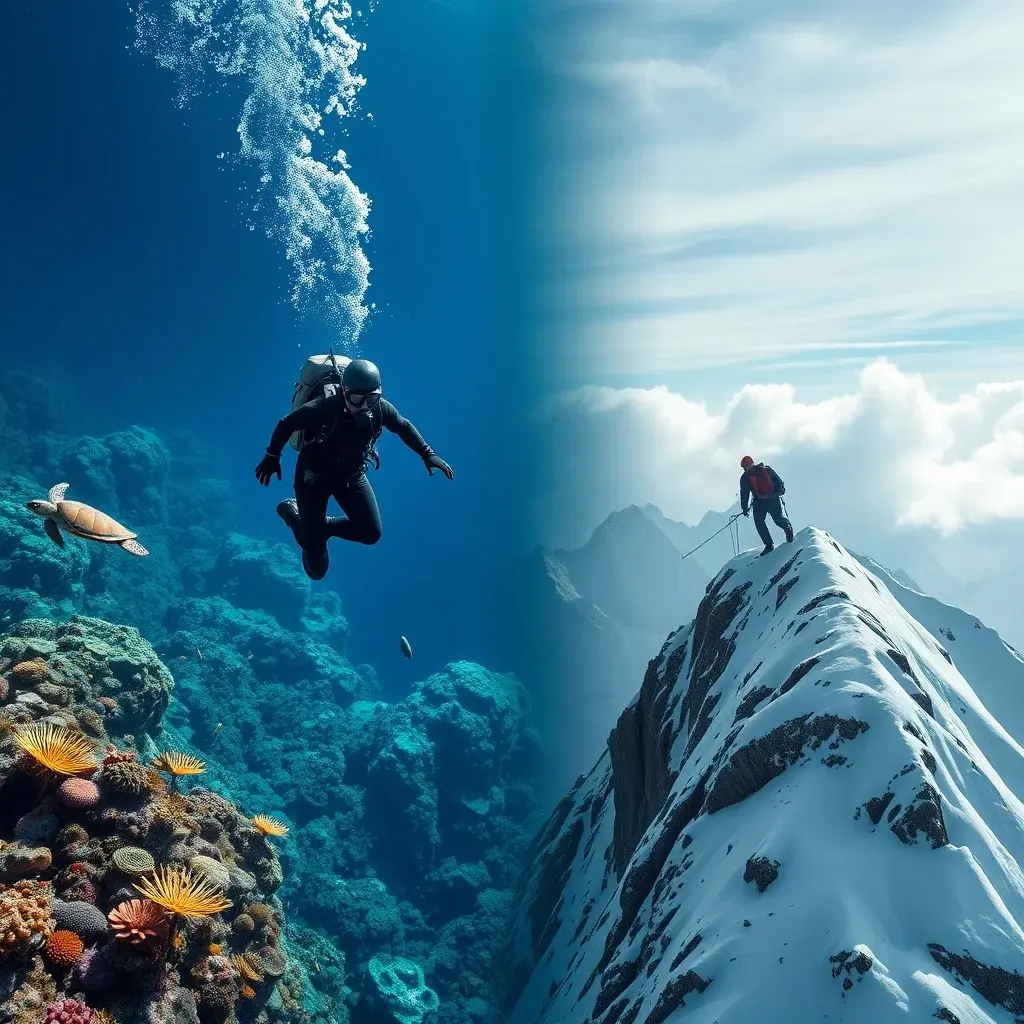
The first time I descended into the cobalt embrace of the ocean, the world above dissolved into a distant memory. The pressure of the deep wrapped around me like a second skin, and the silence was so profound it hummed in my bones. Below, the coral cathedrals stretched endlessly, their branches swaying in slow, hypnotic rhythms as if conducting an ancient symphony only the sea could hear. This was no ordinary dive—it was a pilgrimage into the heart of the abyss, where every breath through my regulator felt like a sacred exchange with the planet itself.
The Thin Line Between Depth and Altitude
There is a strange alchemy in the way deep sea diving and alpine climbing mirror each other. Both demand reverence for the elements, a deep respect for the unseen forces that govern life at the extremes. The diver, weighted by the ocean’s crushing embrace, moves with deliberate grace, while the climber, suspended in the thin air of high altitudes, fights against gravity’s relentless pull. Yet, in both realms, the body adapts, the mind sharpens, and the soul expands to meet the challenge. The abyss and the summit are not opposites—they are two sides of the same coin, each revealing the raw, untamed majesty of Earth in its most unfiltered form.
I remember standing at the base of a towering granite wall in the Alps, my fingers numb with cold, my breath visible in the crisp morning air. The climb ahead was a test of endurance, a dance between fear and focus. But as I ascended, the world below shrank into insignificance, and all that mattered was the next hold, the next breath, the next moment of connection with the rock. It was the same exhilaration I felt descending into the blue—where time slows, and every movement becomes a meditation.
The Gear That Bridges Two Worlds
The tools of these adventures are not just equipment; they are lifelines, extensions of the human spirit. A mountaineer’s ice axe, worn from years of use, tells a story of summits conquered and storms weathered. Similarly, a diver’s regulator, with its sleek design and precise engineering, is a gateway to another world. Both are marvels of human ingenuity, designed to push the boundaries of what we believe is possible. Yet, they also serve as humbling reminders of our fragility—one misstep on a glacier or one faulty breath underwater can mean the difference between life and death.
There’s a poetic symmetry in the way climbers and divers prepare. The meticulous checking of harnesses and carabiners mirrors the diver’s pre-dive safety check, where every valve, every strap, every o-ring is scrutinized. The weight of a climbing pack, carefully balanced for the ascent, is not unlike the diver’s buoyancy control, where the right amount of lead ensures a graceful descent. In both worlds, preparation is not just about survival—it’s about respect. Respect for the environment, for the gear, and for the thin line that separates adventure from peril.
The Sacred Silence of the Extremes
What draws us to these places? Is it the thrill of danger, the allure of the unknown, or something deeper—a primal need to reconnect with the wild heart of the planet? Perhaps it’s the silence. Not the absence of sound, but the presence of something greater. In the mountains, it’s the wind howling through the peaks, the distant rumble of an avalanche, the crunch of snow underfoot. In the ocean, it’s the crackle of shrimp, the haunting songs of whales, the rhythmic pulse of the waves. These sounds are the Earth’s heartbeat, and in their presence, we are reminded of our place in the natural order.
I’ve stood on summits where the air was so thin it felt like breathing through a straw, and I’ve drifted weightlessly in the deep, where the water’s embrace was both comforting and terrifying. In both places, I’ve felt small—not in a way that diminished me, but in a way that expanded my understanding of what it means to be alive. The mountains and the ocean do not care for our ambitions, our fears, or our egos. They simply exist, vast and unyielding, and in their presence, we are forced to confront our own insignificance and, paradoxically, our profound connection to something greater.
The Fragile Beauty We Must Protect
But these sanctuaries are not invincible. The coral reefs, once teeming with life, are bleaching under the stress of warming waters. The glaciers, ancient and majestic, are retreating at an alarming rate. The very places that inspire awe and wonder are under threat, and with them, the delicate balance of life on Earth. As adventurers, we have a responsibility—not just to explore, but to protect. Sustainable tourism is not a buzzword; it’s a necessity. Every dive, every climb, every step into the wild should leave no trace, take nothing but memories, and give back more than we take.
I’ve seen the impact of carelessness firsthand—a discarded oxygen tank on a reef, a trail of litter leading to a base camp, the scars of climbers who took shortcuts at the expense of the environment. But I’ve also witnessed the power of conservation. Coral nurseries where damaged reefs are being restored, climbers organizing clean-up expeditions, divers documenting marine life to advocate for its protection. These acts of stewardship are not just about preserving the places we love; they’re about ensuring that future generations can experience the same sense of wonder that we have.
There is a moment, just before the summit push or the final descent into the deep, when everything else fades away. The doubts, the fears, the distractions—all of it dissolves, leaving only the raw, unfiltered connection between you and the wild. It’s in these moments that we realize adventure is not just about conquering the unknown; it’s about surrendering to it. The ocean does not belong to us, nor do the mountains. We are merely visitors, privileged to witness their beauty, humbled by their power. And if we listen closely, they will teach us how to walk lightly on this Earth, how to cherish its wonders, and how to fight for its future.